Sarah Ferguson Found Yacht Guests Book – Meghan Made $2M As Andrew’s Yacht Girl
Sarah Ferguson Found Yacht Guests Book – Meghan Made $2M As Andrew’s Yacht Girl
The Last Duchess: Sarah Ferguson, Meghan Markle, and the High-Stakes Game of Royal Survival
The gilded gates of the British monarchy have long served as a threshold between public adoration and private crisis. For decades, the House of Windsor has operated on a strict, unspoken code of conduct: discretion is the highest virtue, and institutional loyalty is the only currency that matters. Yet, as 2026 unfolds, that code is being pushed to its breaking point. At the center of this storm stand two women whose lives have intersected in ways that are as complex as they are controversial: Sarah Ferguson, the Duchess of York, and Meghan Markle, the Duchess of Sussex.
In the fevered ecosystem of social media, rumors move faster than reality. Recent weeks have seen the proliferation of sensationalized claims—tales of “leaked” audio recordings and “yacht guest books” designed to paint a picture of illicit secrets and clandestine betrayals between the two women. These stories, though devoid of evidence, have thrived by feeding the public’s insatiable hunger for royal scandal. But look past the digital static, and you find a much more sobering reality: a story of two women navigating the fallout of institutional exclusion, the crushing weight of public scrutiny, and the desperate, often isolating search for financial and social security.
The Myth of the “Yacht Scandal”
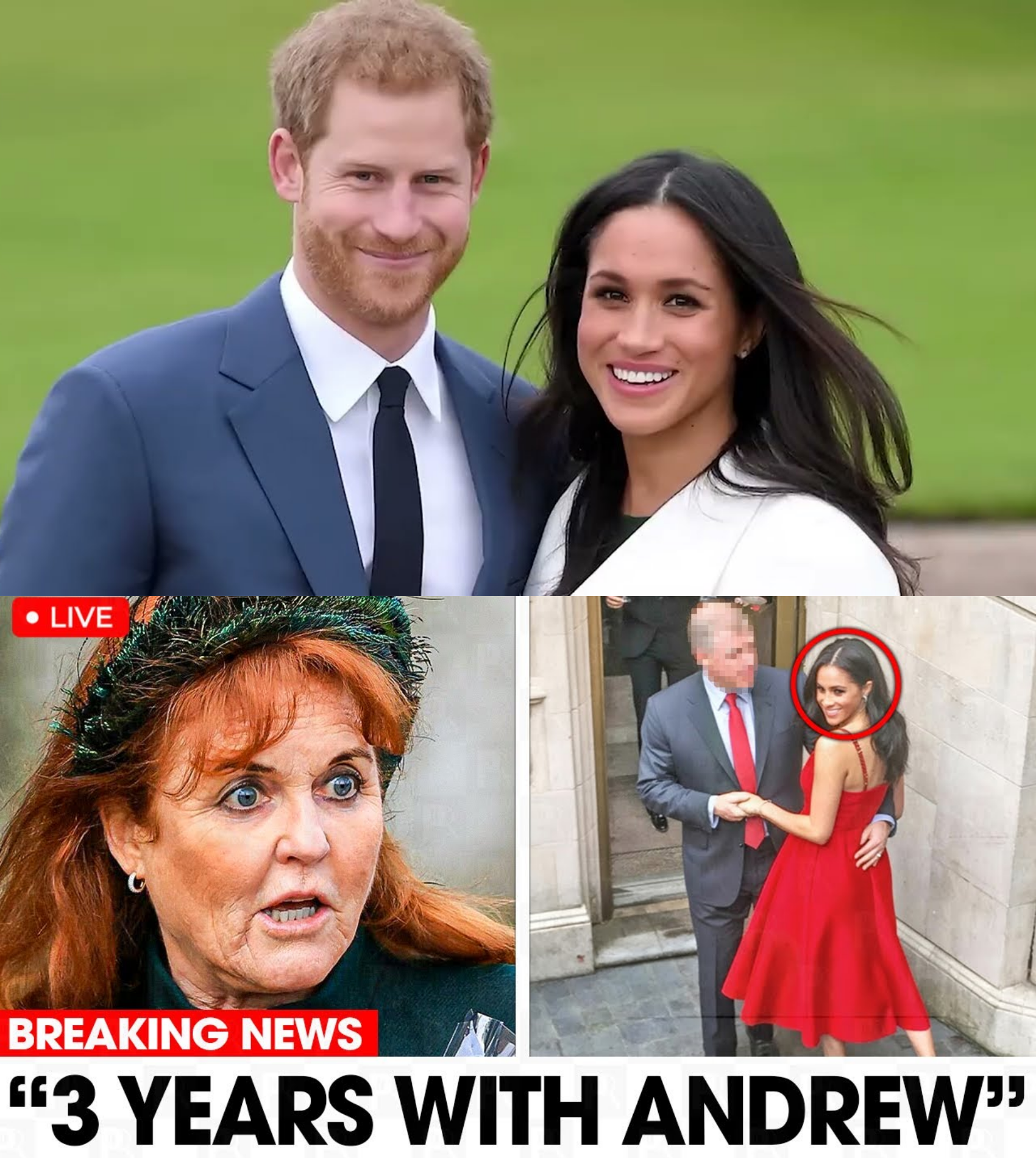
It is essential, first, to state what is fact and what is fiction. The widely circulated rumors suggesting that Sarah Ferguson held secret information on Meghan Markle—or that evidence of a “yacht party” exists—are, unequivocally, fabrications. There is no recording. There is no guest book. There is no credible evidence to support these narratives.
These stories persist because they exploit the real, documented tensions within the extended royal family. By weaving together genuine historical friction—such as the cooling relationship between the Sussexes and the Yorks—with entirely invented “confessions,” purveyors of misinformation have created a narrative that feels true to those already inclined to believe the worst. It is a cautionary tale of how, in the digital age, repetition is often mistaken for reality, and how the vacuum left by the monarchy’s habitual silence is swiftly filled by the noise of conspiracy.



A Relationship of Convenience, Not Connection
The truth of the relationship between Sarah Ferguson and Meghan Markle is far more pedestrian, and perhaps more telling, than the conspiracy theories suggest. In 2016, when Prince Harry was looking for a bridge to introduce his then-girlfriend to his family, he turned to the Duchess of York. Ferguson, a veteran of the tabloid wars and an expert in the pitfalls of “royal-adjacent” life, was the logical choice.
Their early interactions were grounded in practical mentorship. Ferguson, who had weathered the storm of public criticism herself, taught Markle the protocols of life in the palace. It was a cordial, professional dynamic—one that saw Ferguson attend the 2018 royal wedding. However, it was never the deep, lasting alliance the public might have imagined.
As the years progressed, the relationship drifted from mentorship into polite distance. This distancing was not driven by some grand, explosive betrayal, but by the inevitable collision of competing loyalties. When Prince Harry’s memoir, Spare, criticized Prince Andrew—Ferguson’s former husband and a man currently exiled from the heart of the monarchy—the lines of loyalty within the family hardened. For Ferguson, maintaining an alliance with the Sussexes became a strategic liability. By 2023, her public statement claiming she “didn’t really know” Markle was less a sign of personal animosity and more a calculated maneuver—an attempt to insulate herself from the ongoing fallout of the Sussexes’ departure and to safeguard her own precarious position within the family hierarchy.
The Epstein Shadow and the Erosion of Standing
While the relationship with Markle has fluctuated, the true, overriding force shaping Ferguson’s life is the long, dark shadow of her connection to the late Jeffrey Epstein. The £15,000 payment she accepted from Epstein in 2010 to settle her debts has become a millstone around her neck, one that continues to have professional and reputational consequences fifteen years later.
The resurfacing of a 2011 email in which Ferguson referred to Epstein as a “friend” led to her being stripped of her patronage by Julia’s House, a children’s hospice, in 2025. This was not a minor inconvenience; it was a devastating professional blow. It signaled a shift in how charities and corporate sponsors now view the Duchess: as a reputational risk that can no longer be justified, regardless of her decades of charitable work.
The release of the “Epstein files” by the U.S. Department of Justice further exacerbated this isolation. While Ferguson herself was not directly accused of wrongdoing, the optics were impossible to ignore. As King Charles III moved to formalize the removal of Prince Andrew’s titles and evicted the couple from their longtime home at the Royal Lodge, the message from the Palace became clear: the era of “royal-adjacent” ambiguity was over. The institution was streamlining, and those associated with its most toxic controversies were being systematically pushed to the margins.
The Siege of Royal Lodge
The eviction from the Royal Lodge in late 2025 serves as the definitive symbol of this transition. For twenty years, the 30-room Windsor mansion had been the center of the Yorks’ world—a place where the divorced couple cohabitated, defying royal tradition and public logic. The King’s decision to end this arrangement was not merely about property management; it was about reclaiming the image of the monarchy.
For Sarah Ferguson, losing the Royal Lodge means losing her last tangible link to the official royal firmament. She now faces the reality of building a household of her own, a task made exponentially more difficult by her long history of financial instability and failed business ventures.
In this moment of vulnerability, the Duchess has been forced to make choices that have only heightened the tension with senior royals. The Christmas cards she sent in late 2025—described by insiders as “pleading” and “over-the-top”—were an attempt to use personal sentiment to bridge a chasm that the institution has decided must remain wide. The Palace’s decision to ignore these gestures was a cold, necessary response to the reality of the Epstein files and the reputational damage they caused.
The Memoir Threat: A Final Reckoning?
As 2026 gathers pace, the most significant threat to the status quo may not be an external scandal, but the internal one looming in the Duchess’s private diaries. Sources suggest that Ferguson, faced with a total loss of influence and the urgent need for financial security, is now considering the compilation of a tell-all memoir.
It is a maneuver that mirrors the path taken by the Sussexes, yet it is born from a different set of circumstances. Where Markle’s media ventures have been a bid to build a new, independent platform, Ferguson’s potential memoir is a reactive, desperate play for a substantial payday—estimated by some at £10 million—that could safeguard her future.
The prospect of such a book has the Palace on edge. After years of being “managed” by the family, the Duchess of York is now a free agent with a lifetime of secrets, observations, and grievances. Whether she chooses to publish, and what she chooses to reveal, will be the ultimate test of her remaining loyalty to the institution that effectively discarded her.
Conclusion: Two Paths, One Institution
Sarah Ferguson and Meghan Markle are two sides of the same coin in the modern royal story. Both have been defined by their uneasy, often hostile, relationship with the machinery of the House of Windsor. Markle has chosen the path of departure, building an external brand that challenges the institution’s relevance from the outside. Ferguson has chosen the path of slow, painful erosion—clinging to the periphery until the periphery was stripped away entirely.
As we look toward the future, the contrast between the two is striking. Markle’s post-royal career is characterized by careful brand management and a focus on forward-looking media projects. Ferguson’s situation is one of survival, a constant, often frantic effort to maintain relevance and income in a world that has largely moved on.
The story of the Royal Family in 2026 is no longer just about the line of succession or the preservation of ancient traditions. It is about the human cost of being associated with an institution that prioritizes its own survival above all else. For Sarah Ferguson, the “Last Duchess,” the coming months will be a final, high-stakes stand. And for the public, the saga serves as a reminder that behind the palace gates, the drama is rarely about what is whispered in secret—it is about the cold, hard reality of who is allowed to belong, and who is ultimately left out in the cold.