LAST WARNING William & Catherine IGNORED For Oversea Trip As They Enter Dangerous Phase
When Prince Harry and Meghan Markle stepped back from their royal duties in 2020, the move came with seismic consequences — none more personally felt than the loss of Metropolitan Police protection that had guarded Harry his entire life. What followed was a years-long legal battle. In 2022, the Duke of Sussex took action against the British Home Office, determined to reclaim the security detail he believed was essential for his family’s safety.
Despite fierce legal efforts — including a formal appeal in 2024 — Harry’s request was ultimately denied. By May 2025, the case was dismissed. In a rare public statement to the BBC, a disillusioned Harry said, “I can’t see a world in which I would bring my wife and children back to the UK.”
But even as he fought for taxpayer-funded protection, comparisons began to emerge — most strikingly, with his elder brother. Prince William, the heir to the throne, has faced his share of public exposure and personal risk — often without the rigid security demands Harry now insists on.
One story, quietly tucked into the past, has recently resurfaced to illustrate this contrast.
In 2016, during the Prince and Princess of Wales’s tour of India, William and Catherine planned a visit to the Salaam Baalak Trust — a shelter for vulnerable children located in the heart of New Delhi’s chaotic railway district. When their security team contacted co-founder Sanjay Roy to make arrangements, they made a startling request: the royal couple wished to arrive without their full security entourage.




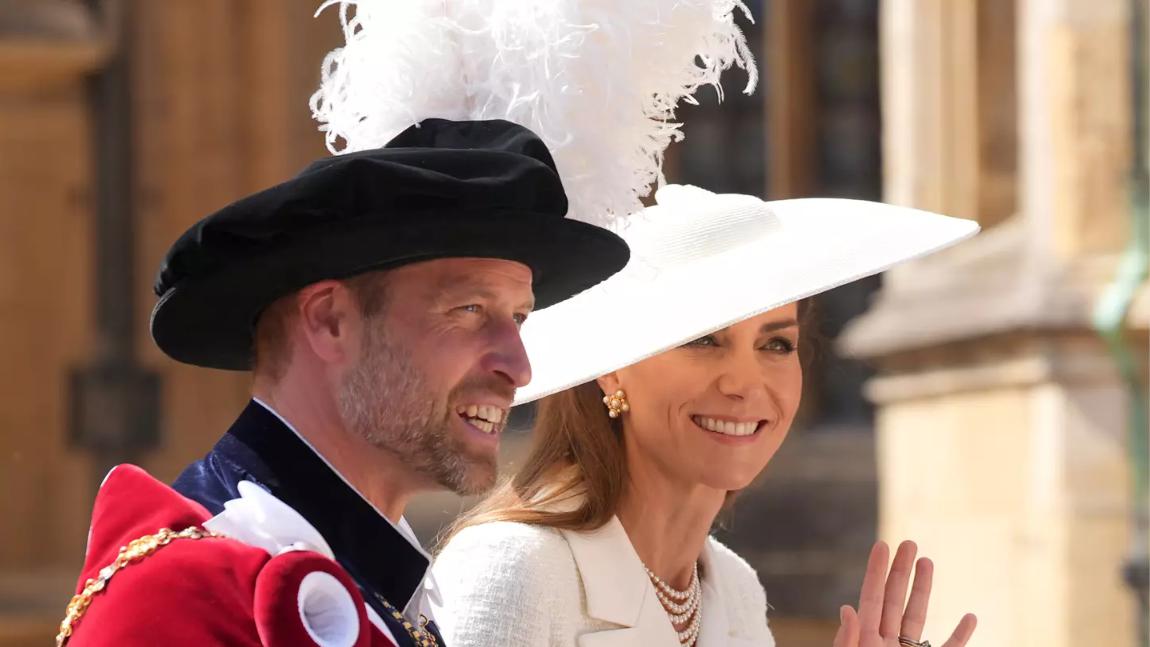
Roy, stunned by the idea, urged them to cancel.
“No can do — it’s too dangerous. Just don’t come,” he recalls telling their aides.
But the couple stood firm. Their response was calm, clear, and resolute: “No, we really want to.”
This wasn’t recklessness — it was respect. They didn’t want flashing cameras or stiff protocol to intimidate the children they were coming to meet. For William and Catherine, the visit wasn’t about optics. It was about empathy.
When they arrived, there was no fanfare. Catherine wore a modest £50 dress from a local high street brand. The couple sat cross-legged on the floor, joined in an art class, and played games. No press frenzy. No royal filter. Just two compassionate people making a human connection.
“They were so wonderfully respectful,” Mr. Roy later reflected. “There was no circus — only a meaningful moment.”
In the wake of Harry’s court loss and growing public frustration, stories like this throw the brothers into sharp contrast.
While one prince speaks of exile and fear, the other navigates global tours — and neighborhood pubs — with striking normalcy.
In 2024, Prince William was spotted at a quiet North Norfolk pub during Easter weekend, casually visiting with his mother-in-law, Carole Middleton. Royal expert Richard Eden recounted: “It was all very low-key, with no great fanfare. He just walked in and through the pub — no panic, no armed guards swarming the premises. Just a future king moving quietly, almost anonymously, among his people.”
These moments reflect a growing divergence — not just in security, but in worldview. Where one brother seeks legal guarantees, the other seeks personal connection, even when it involves risk. Where one speaks of the burdens of public life, the other steps into it — unguarded.
The India visit in particular revealed the Prince and Princess of Wales’s core philosophy: empathy over image. Their choice to forego security wasn’t rebellion — it was intentional. A decision to be present, not protected. To listen, not posture.
In doing so, they demonstrated that real royalty is not defined by how many guards surround you — but by how deeply you’re willing to connect, even in uncomfortable places.
Now among the most beloved royal couples, William and Catherine — who married in 2011 — are known for their grace, subtle displays of affection, and calm poise during public engagements. But behind the polished image is a playful, competitive streak.
During an appearance on The Good, The Bad and The Rugby podcast hosted by Mike Tindall (husband of Zara Tindall), Catherine playfully pushed back when teased about her competitive nature.
“I’m not competitive at all,” she said with a grin.
William laughed, adding, “When we play together, it turns into who can out-mental each other?”
Throughout the podcast, the couple shared their shared passion for sports — from William’s love of football to Catherine’s fondness for cold-water swimming. It was a reminder that behind the protocol are two people who laugh, play, and push each other — in ways both serious and light.
And perhaps that’s the point.
Where their approach to public life differs from Harry’s isn’t in seriousness — but in balance. They’ve embraced duty not by retreating from the world, but by quietly stepping into it — one heartfelt, human moment at a time.