Catherine, William & Their Children Join the Royals at Balmoral Castle – They Embrace Highland Life
As summer stretches over the rugged beauty of the Scottish Highlands, a quiet tradition continues. Prince William, Princess Catherine, and their children—Prince George, Princess Charlotte, and Prince Louis—have once again joined the royal family at Balmoral Castle, embracing a heritage steeped in memory, nature, and reflection.
Their arrival at the 50,000-acre estate in Aberdeenshire isn’t a publicized event—it rarely is. Yet, for those who know royal rhythms, their August presence fits a familiar and cherished pattern. Balmoral is not just another residence. It is the monarchy’s most intimate sanctuary, a place where royal formality softens into family life.
A Castle Woven Into Royal Legacy
Originally purchased in 1852 by Prince Albert as a private gift for Queen Victoria, Balmoral has remained in private royal hands—a stark contrast to official residences like Buckingham Palace or Windsor Castle. Here, the royal family doesn’t just visit—they live, relax, and remember.
The castle has stood witness to nearly two centuries of royal stories: Queen Victoria’s handwritten journals by the fireplace; King George VI’s wartime summers; the young Queen Elizabeth II walking the hills with her corgis; and in her final days, Balmoral became her last refuge. Its granite walls have absorbed not just time, but tenderness.
For William and Catherine, those walls now cradle new memories. Their children, who know both the formality of royal life and the freedom of Highland summers, are growing up within this gentle continuity.



Highland Life: Simple, Sacred, and Still
Each year, the royal summer follows its own quiet rhythm. Sunday services at Crathie Kirk, the small parish church near the castle gates, remain a tradition—a rare moment for the public to glimpse the royal family together. In past years, Catherine has been seen arriving in elegant tartan coats, feathered hats, and reserved smiles—an embodiment of tradition and dignity.
But behind the estate’s wrought-iron gates, the pace slows. George, Charlotte, and Louis trade palace corridors for ponies, meadows, and forest trails. George, already showing an interest in conservation, is thought to have joined educational outings on red squirrel habitats or tree planting efforts, initiatives close to King Charles III’s heart.
Charlotte, inquisitive and confident, enjoys rowing excursions on the River Dee and sketching the landscape with her mother. Louis, the youngest, finds joy in the smallest things—picking wildflowers, collecting stones, or racing after butterflies through tall grass.
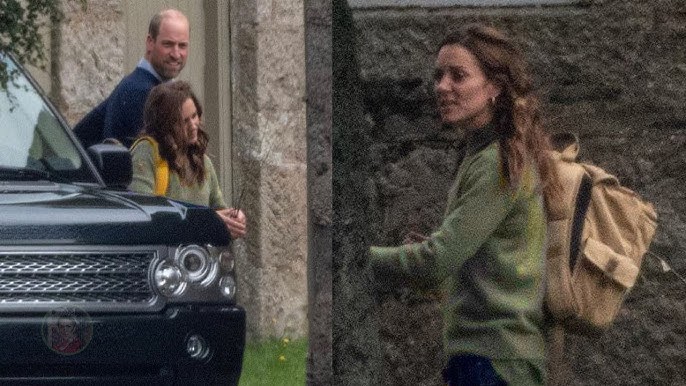
Princess Catherine, never far from her camera, is likely capturing moments that never make headlines: muddy boots at the door, windswept hair, childhood laughter echoing across a glen. William, a lifelong lover of Scotland, is known to join in for Highland walks, deer stalking, or picnics in hidden clearings, following the same paths once walked by his parents and grandparents.
Quiet Service Beneath the Pines
Balmoral is not just about rest. Even in retreat, Catherine and William often find ways to quietly serve the community. In past visits, Catherine has supported local schools, mental health initiatives, and child development programs—sometimes through unannounced visits, other times by partnering with Scottish branches of her charities.
In 2025, it’s believed she may have again visited a Highland primary school, bringing books, speaking with teachers, or engaging in outdoor learning activities—supporting her Royal Foundation Centre for Early Childhood mission.
These moments rarely make headlines, but they’re part of a deeper, quieter royal role: one rooted in presence, not performance.
A Dance of Legacy: The Ghillies Ball
Among the season’s rare formal moments is the Ghillies Ball, held annually in Balmoral’s grand ballroom. First introduced by Queen Victoria, the event is meant to honor estate workers, blending the royal family with the staff who maintain the land they love.
For one evening, tiaras are replaced with tartan, and formalities melt into ceilidh dances, clinking glasses, and shared laughter. It’s here that George might learn his first Highland reel, where Charlotte twirls in a family heirloom sash, and where Louis sneaks extra oatcakes from the buffet table. It’s not just heritage—it’s humanity wrapped in ritual.
A Royal Year in Motion
Earlier in the summer, the family was spotted on Tresco Island in the Isles of Scilly, staying in a stone cottage by the sea—a more coastal counterpoint to Balmoral’s mountains. There, George revisited the place he once celebrated a birthday; Charlotte enjoyed boat rides and seal spotting, while Louis roamed wildflower cliffs, a picture of childhood freedom.
Balmoral, by contrast, offers structure amidst wildness, a space for grounding before the start of the school year and the demands of public life resume.
King Charles’s Balmoral: Change with Continuity
Under King Charles III, Balmoral is gently evolving. He has opened parts of the estate—including the ballroom, gardens, and refurbished cafés—to public tours, reflecting his belief in a more accessible monarchy. Yet he’s done so without compromising the estate’s soul.
He has redesigned certain gardens to reflect eco-conscious principles, championed local craftsmanship in renovations, and maintained the estate as a working symbol of royal tradition and sustainability.
William and Catherine have been quietly supportive of these shifts. As future king and queen, they understand the need to balance heritage with relevance, and privacy with public service. Their participation in Balmoral life is not a performance—it’s a signal of their values: continuity, simplicity, and quiet strength.
Balmoral, in many ways, is the heartbeat of the royal year. A space where memory mingles with mist, where tradition is both preserved and lived anew. For William, Catherine, and their children, it is more than a destination—it is an inheritance of rhythm, values, and belonging.
Will the magic of Balmoral endure in this next royal generation? That may depend on how faithfully these traditions are carried forward—and how openly they’re shared with a changing public.
What do you think?
Does Balmoral still hold its old-world charm in a modern royal age? Should William and Catherine keep the same traditions alive—or adapt them for a new era? Let us know in the comments below.🌲