Royal Family’s BIG Announcement About Princess Diana’s Grave After 28 Years Just SHOCKS Everyone
For nearly three decades, Diana’s resting place has carried the weight of both reverence and secrecy. Shielded by the calm waters of the Oval Lake, it has been a destination of quiet pilgrimage for millions who never had access to the island itself. But with this new revelation, that aura of stillness has been pierced, raising questions that blur the line between history, privacy, and truth.
Insiders describe the mood at Buckingham Palace as tense and fractured. Senior courtiers are said to be debating whether opening the tomb would provide long-overdue clarity or whether it risks unleashing a storm that could permanently damage the monarchy’s image. Legal advisers have already been drafted to determine the jurisdictional complexities: Diana died in Paris, was examined under French authority, and laid to rest on private family land — a web of sovereignty, law, and tradition that makes the decision anything but straightforward.
Beyond the palace walls, the reaction has been even more visceral. In London, small crowds gathered at Kensington Gardens, the site of Diana’s former home, leaving flowers, handwritten notes, and even copies of newspaper clippings from 1997. On social media, hashtags like #OpenTheTomb and #LetHerRest began trending within hours of the announcement, reflecting a nation divided between the pursuit of answers and the preservation of peace.
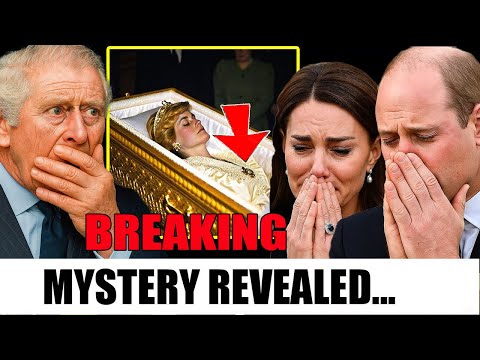
Historians note that the potential reopening of Diana’s tomb would be unprecedented in modern royal history. The remains of sovereigns and consorts have occasionally been examined for restoration or scientific study, but never under such public pressure and controversy. “This is not simply about a grave,” one commentator observed. “It is about the unresolved trauma of a generation and the monarchy’s ongoing struggle with Diana’s ghost — both literal and symbolic.”


Meanwhile, global media outlets from Paris to New York to Sydney have reignited long-shelved investigations, revisiting the blurred details of Diana’s final days, the inconsistencies in reports, and the secrecy that followed her tragic death. French journalists have renewed calls for the release of sealed medical files, while British commentators point to the palace’s historic reluctance to confront scandal head-on.
For Princes William and Harry, the stakes are deeply personal. Friends close to the brothers suggest that their reunion at Althorp was both painful and cathartic — a chance to confront not only their mother’s death but also the specter of renewed public intrusion. “For them,” one confidante revealed, “this isn’t about conspiracy or history. It’s about their mum.”
The clock now ticks on the palace’s 30-day review. Experts suggest the first step may be a non-invasive archaeological survey of the site — ground-penetrating radar and sonar imaging — before any decision on physical excavation is made. But even these preliminary measures will be enough to fuel speculation worldwide.
What is beyond dispute is that Diana’s tomb has never simply been a grave. It is a monument to a life cut short, a mirror of public grief, and a silent question mark at the heart of the modern monarchy. Whether it is left untouched or opened for investigation, the consequences will reverberate for generations.