Princess Catherine’s Harsh PUNISHMENT For Handling Princess Charlotte’s Tantrum In The Public
Raising children in the spotlight is a balancing act few families ever experience, yet the Princess of Wales manages it with remarkable grace. Her approach combines warmth, attentiveness, and an instinctive ability to turn potentially tense moments into lessons of calm reassurance. While the cameras often capture the surface—the polished image of well-behaved young royals—what lies beneath is Catherine’s consistent effort to treat her children first and foremost as children, guiding them with love and composure even when millions are watching.
One of the most memorable examples came in 2017, when Princess Charlotte, then only two years old, became overwhelmed at Hamburg airport during an official tour of Poland and Germany. With flashing cameras and a crowd of onlookers surrounding her, Charlotte’s distress could easily have escalated. Instead, Catherine knelt to her daughter’s level, cradled her gently, and soothed her with quiet words until calm was restored. What might have been remembered as a meltdown turned instead into a touching moment of maternal reassurance. It revealed Catherine’s ability to balance her public role with her instinct as a mother, prioritizing her child’s comfort over the weight of royal formality.
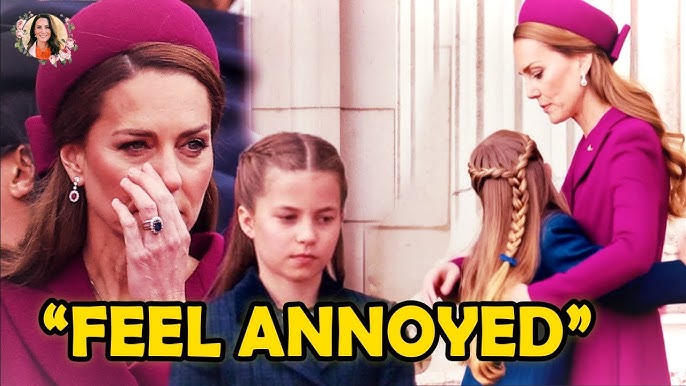
This calm presence has been evident time and again. During the Trooping the Colour celebrations in 2018, another delicate moment unfolded when a three-year-old Charlotte lost her balance on the Buckingham Palace balcony. The child stumbled forward and began to cry, clearly startled by the experience. Catherine, ever attentive, reacted instantly—catching Charlotte and redirecting her attention before lifting her into her arms. The image of a mother’s “supermom reflexes,” as many viewers described it, struck a chord with parents worldwide. The video went viral, amassing millions of views and comments praising her ability to comfort her daughter with tenderness while maintaining composure in the public eye.
Such quick responses are not rare in Catherine’s parenting. Two years earlier, during the 2016 Trooping the Colour, Prince George nearly toppled from the balcony after leaning over to point at something below. Catherine, holding Charlotte in one arm, noticed first and reached out to steady her son. Prince William then grabbed George firmly, while Prince Charles, Queen Elizabeth II, and Camilla looked on with visible alarm. For a brief moment, the royal balcony turned into a scene of collective parental concern. Yet Catherine’s instinctive vigilance—balancing one child while protecting the other—showed again that behind her regal poise lies a deeply involved mother.




Over time, her efforts have borne fruit. Now ten years old, Princess Charlotte demonstrates an impressive maturity during public appearances. Observers note that she has learned to regulate her emotions and respond gracefully in formal settings, a skill nurtured by her mother’s consistent guidance. At school events, sports matches, or royal outings, Charlotte often mirrors Catherine’s calm confidence, taking cues from her mother’s body language and presence.
Part of this development comes from Catherine’s active role in her children’s everyday lives. Far from being a distant figure, she is deeply involved in their education and extracurricular activities. Parents at her children’s school have frequently remarked on her presence at rugby and football matches, cheering alongside other families without fuss or spectacle. Panthia Parker, a fellow parent, once described how Catherine “never misses any of her children’s matches,” a testimony to her hands-on approach. This commitment not only grounds her children in normalcy but also reinforces values of dedication, healthy competition, and teamwork.
Sports in particular have become a cornerstone of the Wales household. Catherine has openly admitted that her family is “a bit competitive,” with George, Charlotte, and Louis all sharing a love of athletics. She encourages her children not simply to play, but to embrace sportsmanship as a lifelong value. Among the three, Charlotte has emerged as especially determined, showing consistency across different activities and embodying the discipline her mother models. Catherine’s steady encouragement has allowed Charlotte to shine—not as a royal performing under pressure, but as a young girl thriving with her mother’s support.
Ultimately, Catherine’s parenting philosophy is revealed in small, unscripted moments: kneeling to reassure a tearful toddler, redirecting attention after a stumble, or cheering from the sidelines of a muddy rugby pitch. She does not shield her children from the world but guides them through it, blending the demands of monarchy with the universality of motherhood. To many parents watching from afar, her example is both relatable and inspiring: even when the weight of tradition and scrutiny looms, the most powerful response is still a mother’s calm embrace.