Catherine And William Arrived At The Westminster Cathedral For The Duchess Of Kent’s Funeral
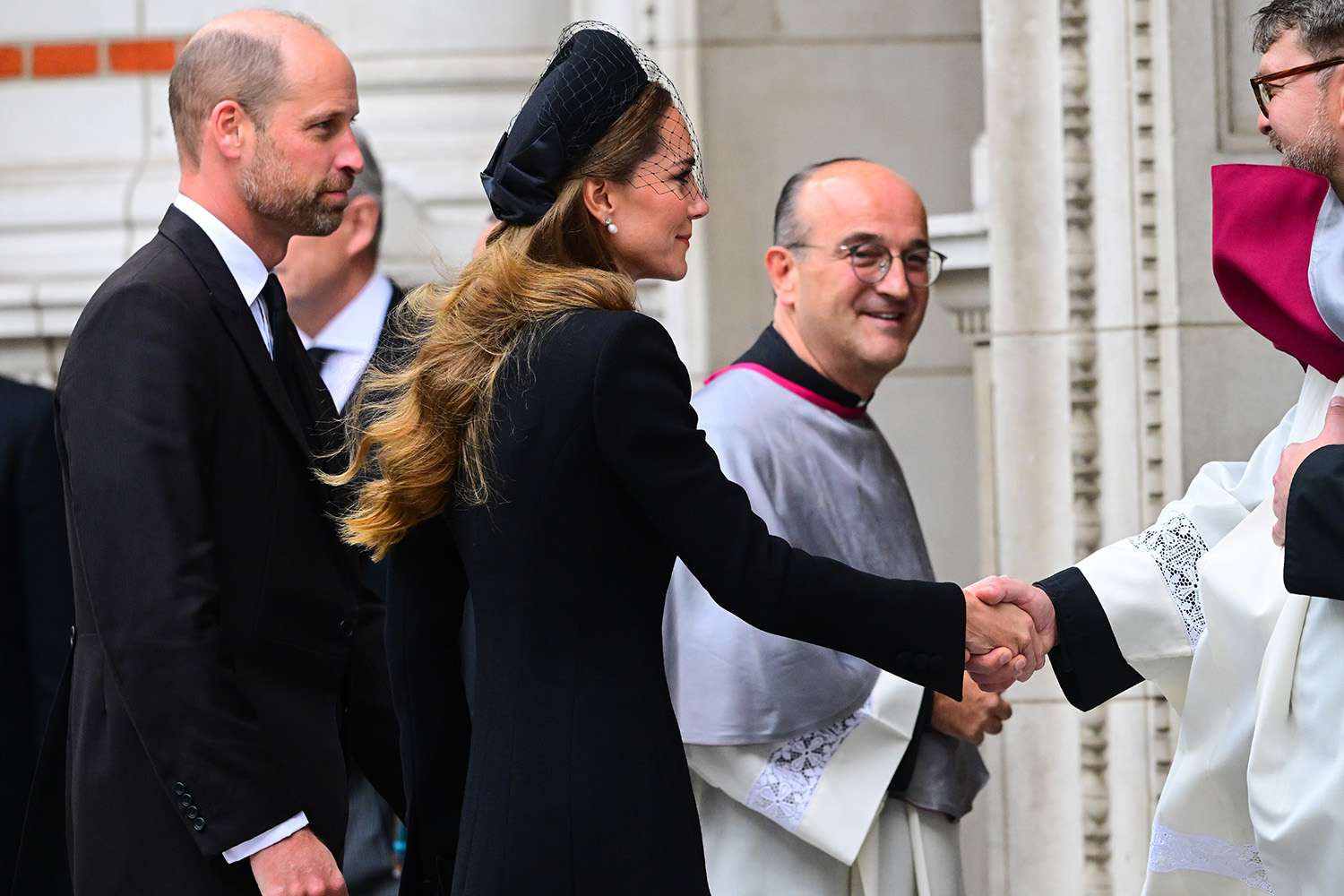
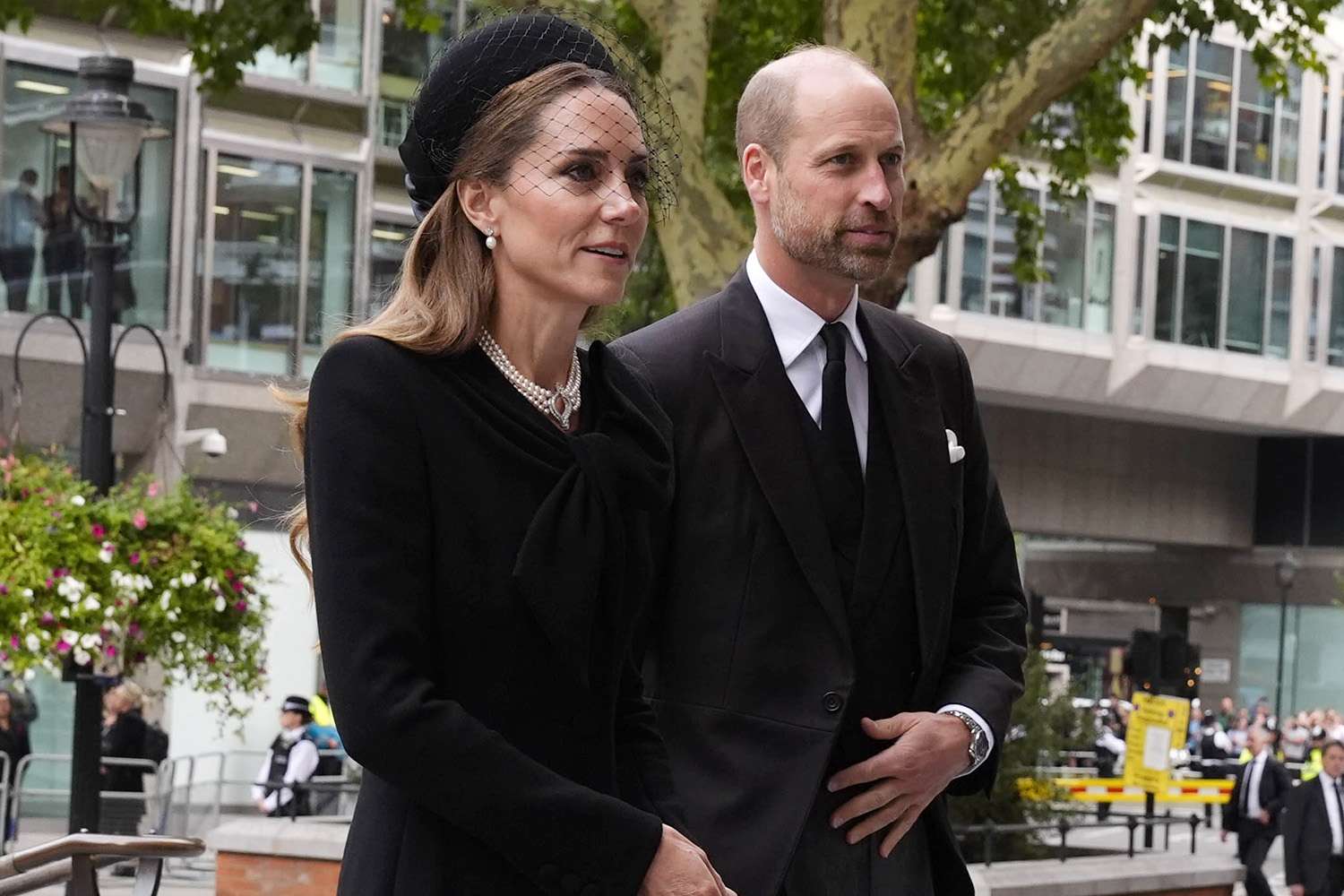
Princess Catherine and Prince William stood shoulder to shoulder with King Charles III at today’s funeral for Catherine, Duchess of Kent, a solemn moment that drew together the royal family in an atmosphere of deep mourning and historic significance. The service, held at Westminster Cathedral, was a rare Catholic Requiem Mass for a member of the British monarchy—an event not witnessed in over three centuries of royal tradition.
At precisely 2 p.m., King Charles, flanked by the Prince and Princess of Wales, entered the cathedral alongside senior members of the royal family. The Princess of Wales, dressed in a tailored black coat dress, pearl drop earrings, and a discreet veil, presented a somber yet dignified figure. Her poise and composure, standing alongside Prince William, embodied the strength and continuity of the monarchy at a time of both grief and transition.
Yet just hours before the funeral, Buckingham Palace made a notable announcement. Queen Camilla, recovering from acute sinusitis, would not attend on the advice of physicians. With the state visit of US President Donald Trump and First Lady Melania Trump scheduled to begin later this week, the Queen has been urged to conserve her strength. In a carefully worded statement, the palace said: “With great regret, Her Majesty the Queen has withdrawn from attendance at this afternoon’s Requiem Mass for the Duchess of Kent. Her thoughts and prayers remain with the Duke of Kent and the entire family.”
The Duke of Kent, the grieving widower, was informed of the Queen’s absence and responded with characteristic graciousness, sending warm wishes for her swift recovery. At 89 years old, the Duke leaned on the support of his daughter, Lady Helen Taylor, as he entered the cathedral. Alongside him were his other children—George, Earl of St. Andrews; Lady Helen Taylor; and Lord Nicholas Windsor—as well as his ten grandchildren, including the widely recognized Lady Amelia Windsor, whose presence signaled the bridge between royal tradition and modern public life.




The Duchess of Kent’s death on September 4th, 2025, at Kensington Palace, closed a remarkable life defined by quiet devotion, independence, and a faith that often set her apart. Her funeral marked a historic milestone: she was the first senior royal to convert to Roman Catholicism since the Act of Settlement of 1701, which restricted Catholics from the line of succession. For Catherine, faith had been a private journey, but today it became a public legacy.
The Mass was conducted by Cardinal Vincent Nichols, Archbishop of Westminster, joined by Bishop James Curry, Auxiliary Bishop of Westminster, and the Dean of Windsor, creating a symbolic blending of Catholic and Anglican traditions. Hymns and prayers highlighted her deep spirituality, while tributes recalled her extraordinary commitment to charitable causes, especially music education, where she quietly taught children in schools without fanfare or recognition.
The service reflected not only her role as a royal consort but her identity as a woman of conviction. Military tributes underscored her honorary roles with the Royal Dragoon Guards and the Royal Logistic Corps, with uniformed representatives lining the cathedral steps in silent respect.
Notably absent from the service was Prince Harry, Duke of Sussex, who had completed a short visit to Britain earlier in the month before returning to California. While not present, he conveyed private condolences to the Duke of Kent and his family. His absence, however, was widely remarked upon, given the service’s historic and spiritual weight.
Following the Mass, the Duchess’s coffin will be transferred to the Royal Burial Ground at Frogmore in Windsor, where she will be laid to rest among generations of royals, including the Duke of Windsor and Wallis Simpson. Across Britain, flags at royal residences—including Buckingham Palace and Windsor Castle—were lowered to half-mast, a symbolic gesture marking the end of a royal life that quietly reshaped tradition.
Today’s funeral was more than a family farewell—it was a moment of royal history. The Duchess of Kent’s legacy of faith, humility, and service leaves behind a lasting mark on the monarchy, reminding both royals and the public alike that strength is often found in quiet defiance, personal conviction, and enduring compassion.