Princess Catherine SPOTTED Driving Near Adelaide Cottage in Chic Blazer and Sapphire Ring
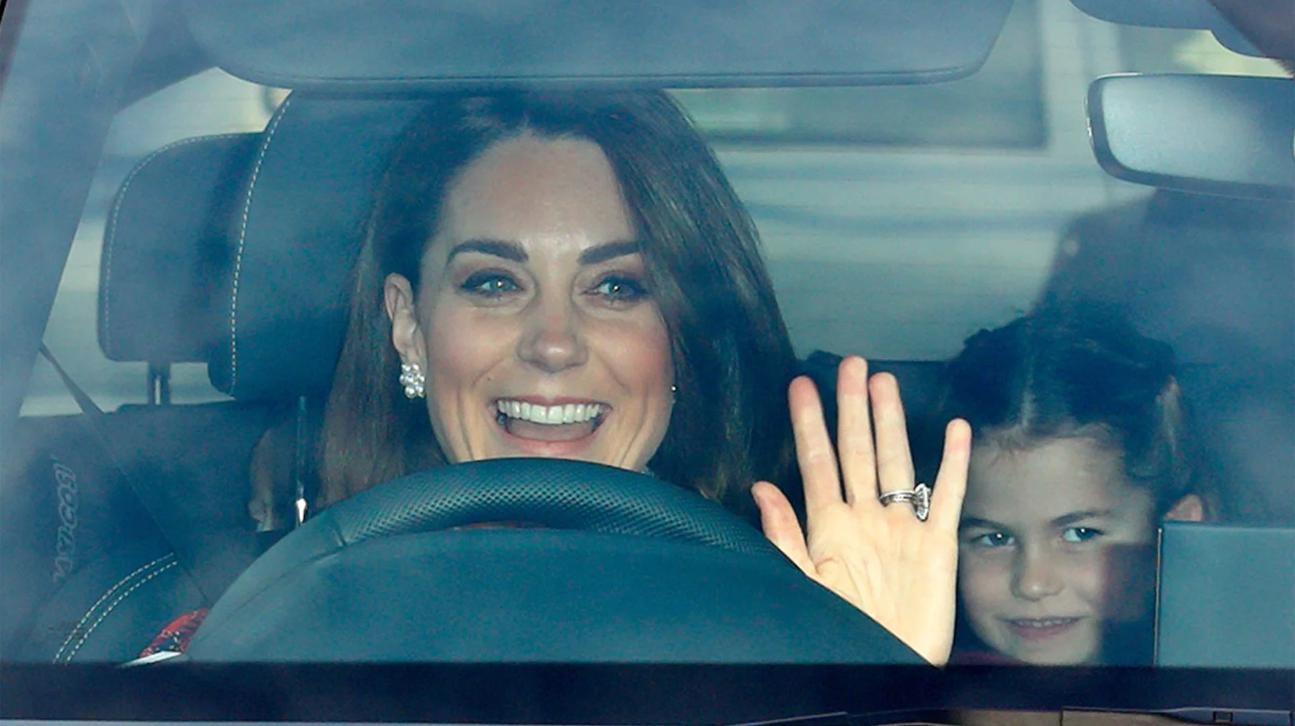
Princess Catherine’s quiet departure from Adelaide Cottage in Windsor offered a glimpse into her private world, balancing royal duty with ordinary family life. At the wheel of her own car, dressed in a dark blazer layered over a crisp white blouse, she radiated ease and understated polish. The sapphire and diamond engagement ring once worn by Princess Diana glistened on her hand beside her simple gold wedding band, subtle reminders of both heritage and commitment. Locals were quick to note her relaxed demeanor—driving without staff or escort—an image that reinforced the Waleses’ determination to raise their children in as normal an environment as possible.
That desire for normalcy is especially relevant as Prince George approaches his 13th birthday in July 2026. His final academic year at Lambrook School has sparked speculation about his next step, with Eton College, Prince William’s alma mater, widely considered the leading contender. Yet reports suggest differing parental preferences: William leaning toward Eton’s traditional all-boys structure and prestige, while Catherine is said to favor her own alma mater, Marlborough College, a co-educational environment known for its more relaxed ethos. The decision—whether Eton, Marlborough, or elsewhere—will mark a pivotal moment in George’s coming of age, balancing family tradition, personal development, and the expectations of monarchy.
September has been a month of striking contrasts for the Princess of Wales. At Southport on the 23rd, she and Prince William returned to meet families devastated by the knife attack that claimed three young girls a year prior. The tone was somber, yet deeply compassionate. Catherine wore a gray Burberry suit softened by a pale pink blouse, her choice signaling dignity threaded with warmth. Both she and William accepted and wore friendship bracelets from locals—William’s reading BB’s Hive in memory of six-year-old Bebe King. Their willingness to display such modest tokens underscored their approach to modern monarchy: empathy expressed through small, human gestures rather than grand ceremony. They also highlighted the charitable initiatives born of grief, praising Elsa’s Story, a foundation created to honor seven-year-old Elsie Stanley.
Just days earlier, on September 17th, the setting could not have been more different. At Windsor Castle, Catherine dazzled in a bespoke golden Chantilly lace gown by Philip Aleppoli for the state banquet honoring U.S. President Donald Trump and First Lady Melania. Paired with the Lovers’ Knot Tiara, Queen Elizabeth II’s Royal Family Order, and King Charles III’s newly instituted Family Order, the ensemble projected both majesty and continuity. The golden gown drew immediate comparisons to Queen Elizabeth II’s attire for a 2003 banquet with President George W. Bush—an echo across decades that linked Catherine’s presence to her late grandmother-in-law’s enduring legacy of statecraft.




Taken together, Catherine’s appearances in 2025 trace a wide arc of royal identity. In Norfolk, she wore pearls of remembrance. At galas, she appeared in radiant scarlet. At Windsor, she glimmered in gold. At Southport, she was understated in gray and pink, bound by the bracelets of grieving parents. Each choice—whether couture or simple cotton—spoke of resilience, compassion, and duty.
More than fashion, these decisions have formed a narrative: Catherine is not merely “returning” after illness but redefining her role as Princess of Wales. She is at once a custodian of tradition and a bridge to modernity, embodying majesty in one moment and quiet humanity in the next.