Catherine Issues Powerful Statement on How Technology Is Eroding Human Bonds
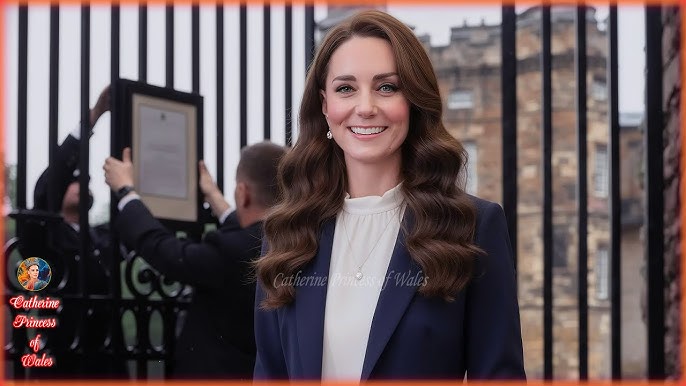
In a deeply reflective and thought-provoking essay, Princess Catherine, the Princess of Wales, has sounded a heartfelt alarm over what she calls a “toxic trend”: humanity’s growing reliance on technology and its devastating impact on our emotional well-being and human connection. Published by the Royal Foundation Centre for Early Childhood, the essay—titled *The Power of Human Connection in a Distracted World*—is co-authored with Professor Robert Waldinger of Harvard University, one of the world’s leading experts on human happiness and relationships. Together, they present a clear, science-backed message: if we wish to build healthier, happier lives, we must reconnect with what truly matters—one another.
At the heart of Princess Catherine’s essay lies a powerful truth: warm, loving, and meaningful relationships are the single greatest investment we can make for health and happiness. The princess emphasizes that modern life—marked by relentless speed, constant distraction, and the silent epidemic of loneliness—is eroding our ability to form the kind of deep, nurturing relationships that sustain us.
She warns that this erosion doesn’t just affect adults—it begins in childhood. “When our youngest children grow up in environments where attention is fragmented and emotional presence is scarce,” she explains, “we risk compromising their social and emotional development—the very foundation of their future well-being.” The essay underscores how early experiences of love, empathy, and connection lay down neural and emotional patterns that last a lifetime.
In fact, as the princess notes, “people who developed strong social and emotional skills in childhood maintained warmer connections with their spouses six decades later, even into their 80s and 90s.” These findings reveal a profound truth: human connection is not just a “nice to have.” It is a biological necessity that determines our long-term happiness, resilience, and even longevity.




In what is perhaps one of the essay’s most striking passages, Princess Catherine reflects on how society has gradually turned away from one another. “For the past 70 years, we have been investing less and less in each other. We are less likely to have dinner together as a family—something we know has an enormous impact on child development. We are less likely to have friends over. We are less likely to join clubs and community groups.”
It is a sobering observation—and one supported by decades of social science research. Fewer people now say they have someone they can confide in. Many describe feeling emotionally adrift, isolated in a sea of digital noise. And heartbreakingly, the loneliest age group is no longer the elderly, but young people aged 16 to 24—those who should be at the peak of social connection.
The princess’s warning is stark: “We live increasingly lonelier lives, which research shows is toxic to human health.” Loneliness, she reminds us, is not just an emotional experience—it’s a serious health issue comparable to smoking or obesity in its physical impact.
While Catherine acknowledges that digital technology has brought enormous benefits—from communication and learning to creativity—she insists we must be honest about its darker side. “While digital devices promise to keep us connected, they frequently do the opposite,” she writes. “Our smartphones, tablets, and computers—designed to link us to the world—have quietly become barriers between us and the people sitting right next to us.”
“We sit together in the same room,” she observes, while our minds are scattered across dozens of apps, notifications, and feeds. We’re physically present but mentally absent. This “epidemic of disconnection,” as she calls it, strikes at something fundamental: the gift of attention.
“Our undivided attention is the most precious gift we can give another person. Yet, increasingly, it’s the most difficult gift to offer.” When we check our phones mid-conversation, scroll during dinner, or half-listen while typing an email, we’re not just distracted—we’re withdrawing something essential: love expressed through presence.
And children, the princess warns, notice this. They are learning from us what connection—or disconnection—looks like.
Princess Catherine has long been passionate about the early years of a child’s life, and her essay ties this passion to a pressing modern dilemma. “The challenge is particularly acute,” she writes, “for today’s babies and young children who have been born into a world immersed in digital technology.” These children are growing up surrounded by screens rather than faces, emojis instead of emotions, and constant background distraction instead of genuine engagement.
The essay calls this a “moment of reckoning”—one that demands parents, educators, and society at large to rethink how we balance technology with humanity. Catherine’s message is not anti-technology—it’s pro-connection. She’s asking us to pause and ask a simple but urgent question: what kind of world are we building for our children if we cannot give them our full attention?
Throughout the essay, Princess Catherine’s voice is both compassionate and resolute. She speaks not just as a royal figure, but as a mother, a leader, and a woman who deeply believes in the transformative power of human relationships. Her vision is clear: if we want healthier, happier lives, and a more loving world, we must invest in relationships from the very beginning.
That investment begins with the small things: putting our phones down during dinner, truly listening to one another, rebuilding community ties, and prioritizing emotional education for children. It is about creating environments where presence, empathy, and attention are valued as much as productivity or digital engagement.
*The Power of Human Connection in a Distracted World* is more than an essay—it’s a wake-up call. Princess Catherine’s words echo across generations, challenging us to confront one of the most defining paradoxes of our time: the more connected we are digitally, the more disconnected we become emotionally. Her message is both timeless and timely: if we want our children—and ourselves—to thrive, we must remember that no device, no algorithm, and no social media platform can ever replace the warmth of human connection.