BREAKING: Prince William Awards Princess Diana’s Sacred Ruby Set To Catherine Bypassing Camilla
 The truth behind this headline is even more jaw-dropping than you can imagine. Get the full article in the comment.
In a quiet corridor of Kensington Palace just after dusk, a private summons delivered in near-total secrecy set off a chain of events that would ripple through the British royal family. Senior aides reportedly were not even allowed to attend, a detail that underscores the extraordinary sensitivity of the matter. Within an hour, Prince William emerged carrying a sealed velvet case once associated with Diana, Princess of Wales, an artifact whose significance is whispered about in royal circles but rarely discussed publicly.
The Sacred Ruby set, as insiders call it, is not just a collection of jewels but a repository of memory and legacy. According to palace sources, the set has long been treated as a symbol of Diana’s pain, her dignity, and the future she was never able to fully experience. When William received final authorization to access this piece of Diana’s private legacy, the palace corridors reportedly shifted with an almost palpable tension. Staff and household members sensed that something profound was unfolding, though few could articulate exactly what.
Catherine’s expression during the event was reportedly calm but unmistakably emotional. Observers noted that her demeanor suggested both anticipation and anxiety — a recognition of the historic weight of the moment. Meanwhile, Camila was kept entirely unaware of the meeting. According to insiders, this secrecy was deliberate: a measure to protect sensitive negotiations and to prevent any premature interference in a highly personal and politically charged process.
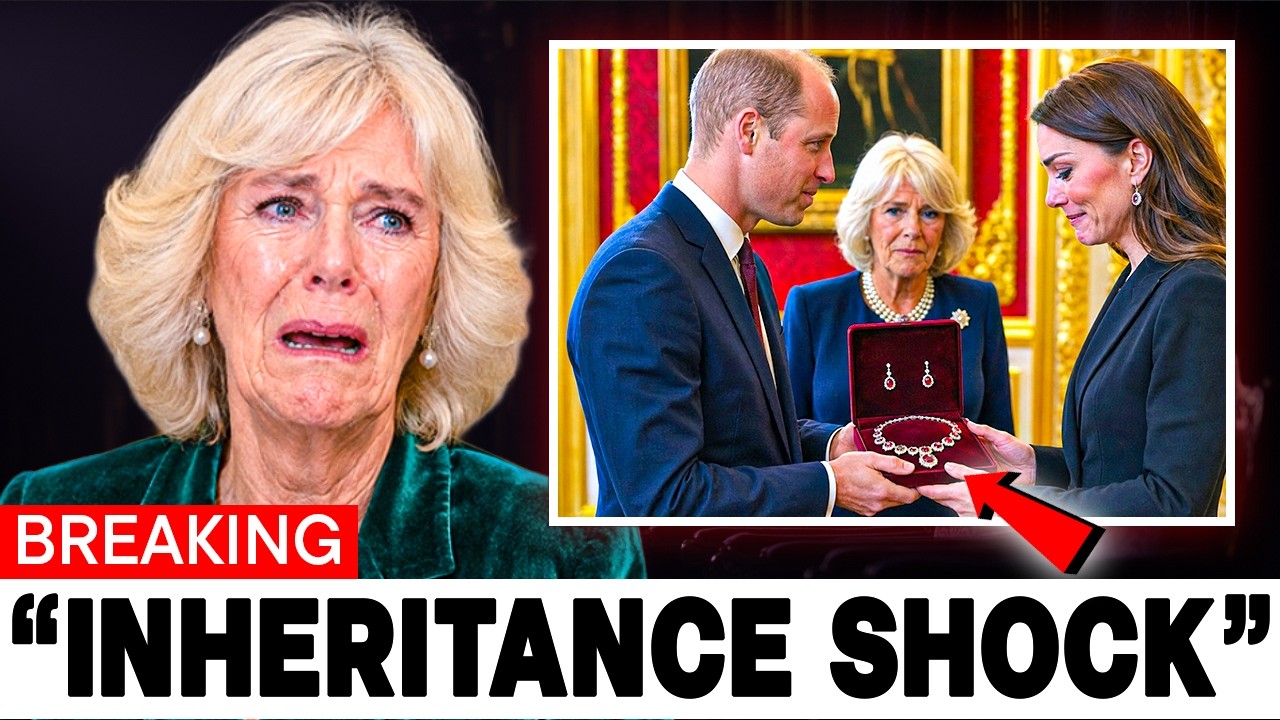
The drama surrounding the Sacred Ruby set is not merely about jewelry. It is about the politics of legacy within the monarchy, the question of access and influence, and the careful management of public perception. William’s decision to involve Catherine before senior household members indicates a deliberate consolidation of trust and authority. In a palace culture where hierarchy dictates every action, being informed late can feel less like oversight and more like an intentional message.
According to reports, William’s handling of the case has exacerbated long-standing tensions between Camila’s faction and other palace figures. The lack of consultation and the selective sharing of information have led to speculation that the Prince is asserting a new approach to royal decision-making, one that balances respect for precedent with a more assertive exercise of personal judgment. Sources suggest that Camila’s side interpreted the silence not merely as bureaucratic oversight but as a subtle assertion of influence over matters traditionally under her purview.




Inside Kensington Palace, the situation highlights broader questions about succession, control, and the preservation of Diana’s legacy. The Sacred Ruby set is more than a historical artifact; it is emblematic of a narrative that the royal family has struggled to control. For decades, Diana’s life, her relationships, and her legacy have been closely scrutinized by the public and the press. Now, with this private inventory reopened, the family is confronted with both the symbolic and practical implications of its stewardship.
The secrecy surrounding the event also raises questions about transparency within the monarchy. While the royal family has always relied on discretion, the selective flow of information in this instance has fueled speculation. Why was Camila not informed? Why were senior aides excluded? What internal calculations guided William’s decision to move ahead with the inventory? These questions, while unanswered, suggest a palace strategy designed to balance authority, loyalty, and the management of potential conflict.
For Catherine, the responsibility of handling the Sacred Ruby set carries both emotional and political weight. Insiders suggest that her involvement represents a consolidation of trust between her and William, a recognition that the future of the monarchy may require coordinated stewardship of sensitive legacies. Catherine’s calm exterior may conceal an acute awareness of the pressures at play — pressures that combine personal loyalty, public expectation, and the enduring scrutiny of Diana’s memory.
The decision to reopen the inventory quietly, without broad consultation, reflects the palace’s complex approach to internal governance. Royal decisions are rarely purely administrative; they carry symbolic, historical, and emotional significance. In this case, the act of retrieving and securing the Sacred Ruby set signals a deliberate acknowledgment of both past grievances and future priorities. Observers suggest that William is asserting a model of leadership that emphasizes discretion, personal judgment, and the careful allocation of authority.
At the same time, the episode underscores the tension between the monarchy’s ceremonial duties and its internal politics. The Sacred Ruby set is a physical artifact, but it also represents intangible issues: legacy, influence, and the management of narrative. Every movement, every decision, carries the risk of interpretation, rumor, and public scrutiny. The palace’s handling of the case reflects the delicate balancing act required to maintain institutional integrity while addressing deeply personal matters.
Historically, royal inventories have been tightly controlled, with limited access granted to only a few trusted individuals. The decision to grant William and Catherine access — while excluding other senior figures — is consistent with this tradition of selective disclosure. Yet it also signals a potential shift in how authority is exercised within the family. By controlling access to historically significant items, William is actively shaping the narrative of Diana’s legacy and, by extension, his own approach to royal leadership.
The implications of this episode extend beyond personal or familial matters. Royal artifacts such as the Sacred Ruby set carry public resonance; they are symbols through which the monarchy communicates continuity, tradition, and authority. By handling the inventory with discretion, William and Catherine reinforce their roles as stewards of both the past and the future. At the same time, the internal secrecy fuels speculation and debate, highlighting the persistent tension between public expectation and private governance within the monarchy.
Reports also suggest that the reopening of the inventory has prompted internal reflection among household staff. The timing, method, and participants of the meeting indicate a strategic approach to palace operations, where communication, loyalty, and hierarchy intersect. For aides and staff, observing the orchestration of this event provides insight into the evolving dynamics of royal decision-making and the ways in which influence is exercised in practice.
The public and media reaction to the revelation of the Sacred Ruby set has been intense. Analysts and royal commentators have debated the implications for Camila, Catherine, and William. While the family has long managed its internal affairs with discretion, the selective disclosure of this inventory has prompted renewed interest in questions of authority, trust, and legacy. Social media discussions, news reports, and commentary pieces have highlighted the enduring fascination with Diana’s life and the ongoing negotiation of her memory within the royal family.
Moreover, the handling of the inventory reflects broader issues in the monarchy: how to reconcile tradition with modern expectations, how to manage sensitive historical artifacts, and how to assert authority without generating internal conflict. William’s approach appears to prioritize both discretion and decisive action, signaling a potential model for future royal governance. Catherine’s involvement adds a layer of continuity and stability, underscoring the importance of trusted partnerships in managing complex institutional legacies.
As the palace navigates the ramifications of the Sacred Ruby set, insiders emphasize that the situation is emblematic of broader themes in royal leadership. Decisions about access, authority, and communication carry consequences far beyond the immediate participants. They shape narratives, influence public perception, and establish precedents for how sensitive matters are handled in the future. In this sense, the inventory is both a literal and symbolic touchstone for the monarchy’s ongoing evolution.
Finally, the episode highlights the enduring impact of Diana’s legacy. Even decades after her death, her influence continues to shape decision-making, public interest, and internal palace dynamics. The careful stewardship of her personal artifacts reflects an awareness of their symbolic power — as reminders of her life, her values, and the unresolved questions surrounding her memory. For William and Catherine, the Sacred Ruby set is more than jewelry; it is a link to the past, a tool for shaping the present, and a guidepost for future leadership.
In conclusion, the reopening of the Sacred Ruby inventory at Kensington Palace is a window into the complexities of royal governance, the enduring resonance of Princess Diana’s legacy, and the careful negotiation of authority within the British monarchy. William and Catherine’s measured handling of the situation illustrates the balance between discretion and decisive action, while the exclusion of other senior figures underscores the strategic nature of communication and hierarchy. For observers and commentators, the event serves as a compelling case study in institutional leadership, legacy management, and the enduring fascination that surrounds one of the world’s most closely watched families.