Catherine STOLE THE SPOTLIGHT In McQueen Dress And Daring Opera Gloves Statement at Red Carpet
When Princess Catherine stepped onto the BAFTA 2023 red carpet, the atmosphere shifted. Cameras clicked, fans gasped, and for a moment, time seemed suspended. This was not the gentle princess of pastel gowns and delicate tailoring. This was a vision reborn — a woman in a flowing white Alexander McQueen gown, transformed by the audacious addition of jet-black opera gloves. The look was bold, cinematic, and unapologetically modern. It was not just fashion; it was theatre.
Almost instantly, questions raced through the crowd and spilled onto headlines: Was this merely a recycled dress? Or was Catherine delivering a deliberate statement — her own royal duel with Hollywood glamour?
And then came the moment that elevated the night beyond fashion. Observers caught Catherine’s hand — a fleeting touch against the small of Prince William’s back. In a family known for restraint, such an intimate public gesture was extraordinary. The glamour of the gown and the warmth of the marriage fused in that instant, sending tabloids into overdrive. Beneath the flash of the cameras, a couple’s unity quietly became part of the spectacle.
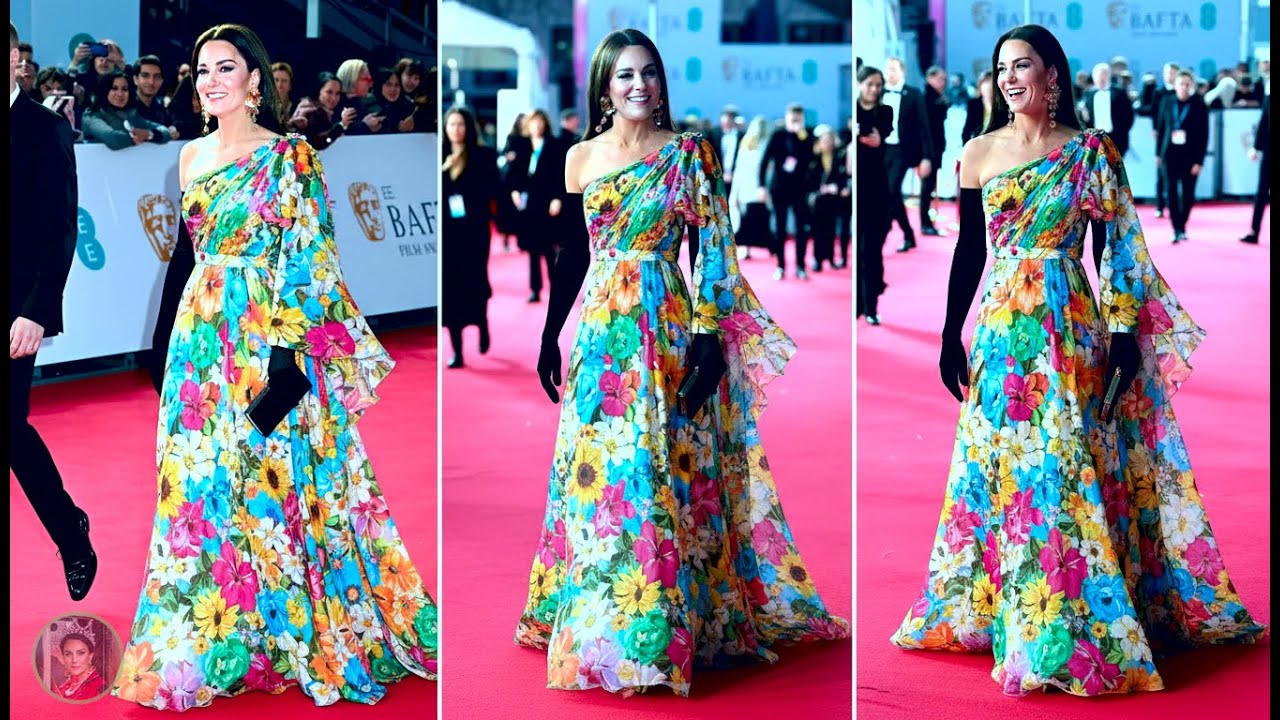
To grasp the full weight of that evening, one must look back. Catherine first wore the same McQueen gown to the BAFTAs in 2019. Its asymmetrical one-shoulder neckline, cinched waist, and romantic draping drew admiration, but also comparisons. Fashion critics noted its uncanny resemblance to Anne Hathaway’s 2007 Valentino gown at the Venice Film Festival. For years, the parallel lingered in style circles, a quiet echo between royalty and Hollywood.




But in 2023, Catherine rewrote that narrative. With the addition of Cornelia James opera gloves — a brand with a royal warrant from Queen Elizabeth II — she fused the heritage of monarchy with the drama of the silver screen. As Genevieve James herself remarked, “Opera gloves are transformative. They turn any event into an occasion, and any dress into a statement.” Catherine’s choice was no accident. She had transformed a memory into a manifesto.
Timing mattered. Just three years earlier, BAFTA organizers had urged guests to champion sustainability: to rewear, rent, or choose vintage. Catherine not only complied but elevated the cause. She reimagined rather than replaced, proving that sustainability could be regal. In doing so, she echoed a broader movement led by figures like Cate Blanchett, who advocated for responsible fashion on global stages. Catherine’s gown became a royal rebuke to the churn of disposable celebrity style.
The ripple effect was undeniable. Months later, Taylor Swift arrived at the Grammys in a sleek white gown paired with long black gloves. Fashion journalists quickly pointed out the resemblance, noting how Catherine’s BAFTA look had traveled — from London to Los Angeles, from royalty to pop royalty. What began as an echo of Anne Hathaway in Venice had evolved into a cross-continental fashion legacy, binding Hollywood, music, and monarchy together through a single silhouette.
By year’s end, Vogue named Catherine’s BAFTA ensemble one of her most iconic fashion moments. It was no longer just a dress; it was an image etched into cultural memory. Catherine had taken a gown once seen as derivative and turned it into a global statement of reinvention.
In a world obsessed with the new, Catherine proved that rewearing could rival reinvention, that style could be sustainable and still command the spotlight. The gloves gave the gown edge, the gown gave the gloves meaning, and together they gave Catherine a platform to project resilience, intimacy, and influence.
On that glittering February night in London, Princess Catherine didn’t just walk the BAFTA red carpet. She defined it. By rewearing, by reinventing, by daring to merge monarchy with cinema, she created a moment that transcended fashion and entered legacy.
She did not echo Anne Hathaway.
She eclipsed her — and in doing so, redefined what modern royal glamour can mean.