Catherine Stunning In Garden Party Outfit hosted by King Charles and Queen Camilla
Over more than a decade of attending the royal family’s garden parties, Princess Catherine has turned these open-air gatherings into a subtle chronicle of her evolution — from a newlywed navigating royal life to a poised Princess of Wales shaping her modern royal image. What might appear, to the casual observer, as pleasant seasonal fixtures have in reality become carefully staged opportunities for soft diplomacy, where every hat tilt and fabric choice serves both aesthetic and symbolic purposes.
These events — held most famously in the gardens of Buckingham Palace and at Windsor — invite a broad cross-section of society: charity workers, military veterans, community leaders, and everyday citizens whose contributions merit royal recognition. For Catherine, they present a delicate balancing act: she must project formality, deference to tradition, and accessibility all at once. In the earliest years, this balance leaned heavily toward pastel palettes, structured coat dresses, and modest fascinators — visual cues aligning her with the late Queen Elizabeth II’s style vocabulary. The choices spoke of respect for royal precedent and an unspoken apprenticeship in ceremonial dressing.
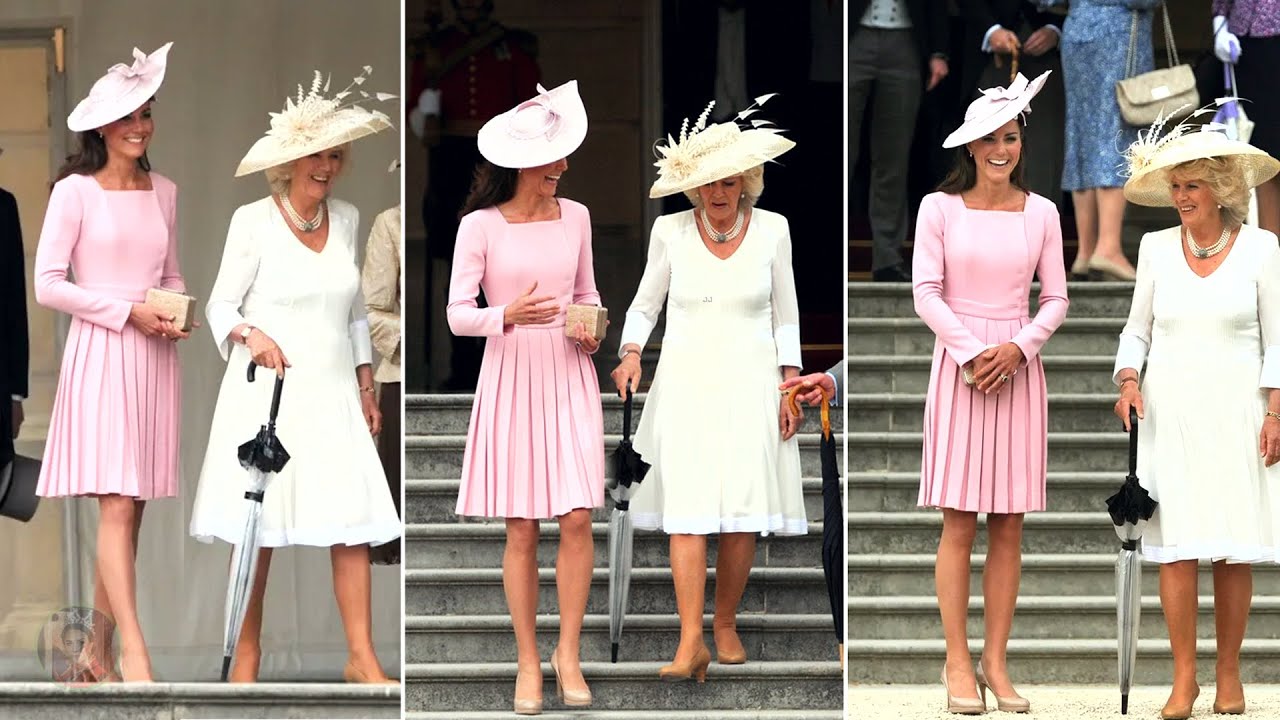
Her debut came in May 2012, less than a year after her wedding. The occasion carried extra weight: her presence alongside the late Queen signaled a generational handover, a fresh chapter for the monarchy. Catherine wore a carnation-pink Alice dress by Emilia Wickstead with a square neckline, fitted bodice, and long sleeves, the waistline marked by an inset band and the skirt pleated to sway gently in the spring breeze. A blush Jane Corbett hat with lace accents framed her face, while LK Bennett’s patent sledge pumps and a Natalie straw clutch reinforced her preference for British brands. Double-drop pearl earrings provided a note of continuity with royal jewelry traditions.
In May 2013, she returned under a different kind of public gaze — visibly expecting her first child. The mood of that garden party was celebratory, honoring unsung heroes of British life, and Catherine’s attire seemed to mirror that optimism. She wore a bespoke yellow-and-white abstract print Mya coat, again by Emilia Wickstead, paired with Russell & Bromley’s gold-trimmed Fifth Avenue clutch and Park Avenue pumps, whose rounded toes and platform soles offered comfort for hours of mingling on manicured lawns.




As her public role expanded — especially after the births of her children and the increase in her official patronages — Catherine’s approach to these appearances became more strategic. From 2016 to 2019, her garden party looks grew bolder: solid, saturated color blocks in cerulean, raspberry, and buttercup; bespoke tailoring from Alexander McQueen and Emilia Wickstead; and subtle nods to the royal vaults in the form of heirloom brooches or earrings. These choices were no longer about gently introducing herself to the role; they reinforced stability and continuity at a time when the monarchy was weathering political upheavals and generational transitions.
The pandemic hiatus in 2020 and 2021 paused the tradition, but her return in 2022 was telling. In lemon-yellow and cornflower-blue ensembles paired with heritage millinery, she projected resilience and joy — colors and silhouettes that spoke of renewal after a collective period of difficulty. By now, Catherine’s garden party appearances were finely tuned instruments: they celebrated the season’s lightness while acknowledging deeper currents in public sentiment.
Fast forward to the summer of 2025, when she attended the Windsor Garden Party — a slightly less formal but historically rich setting. The more intimate environment allowed her to soften her aesthetic without losing gravitas. She selected a pale-green coat dress crafted from sustainable fabric, paired with a floral headpiece. The palette and materials were deliberate: the green echoed her previous engagements tied to nature and environmental stewardship, while the sustainable sourcing aligned with the royal family’s increasing advocacy for conservation. Here, the message was clear — tradition can evolve to serve contemporary causes.
Across all these appearances, some constants endure: her steadfast support for British design, her adherence to royal dress codes, and her instinct for symbolic detail — whether through a jewel once worn by the Queen or a hue linked to a charitable cause. But the progression from gentle pastels to confident, message-driven ensembles reveals a quiet mastery of visual communication. Catherine has turned the royal garden party into a platform for narrative control, using color, cut, and context to connect with the public while reinforcing her role as a bridge between heritage and modernity.
In the process, she has shown that these events are not just social niceties. They are, in her hands, deliberate acts of representation — moments where tradition, personal style, and the subtle currents of diplomacy converge on a perfectly manicured lawn.