Catherine’s Touching Gesture Toward King Charles During Duchess Of Kent’s Heartfelt Funeral
The British royal family gathered in solemn unity at Westminster Cathedral to honor and bid farewell to Catherine, Duchess of Kent, in a funeral service that was both historic and profoundly moving. Draped in centuries of tradition yet marked by personal emotion, the requiem mass carried with it deep spiritual and historical weight, not least because it marked the first Catholic funeral for a senior member of the royal family in modern history.
As the cathedral’s organ echoed solemn hymns, King Charles III, the Prince and Princess of Wales, and members of the extended Kent family sat in reflective silence, their grief tempered by dignity. The Duchess’s coffin, adorned with white lilies and roses, symbols of purity and remembrance, rested at the heart of the service before being carried out in a slow, reverent procession.
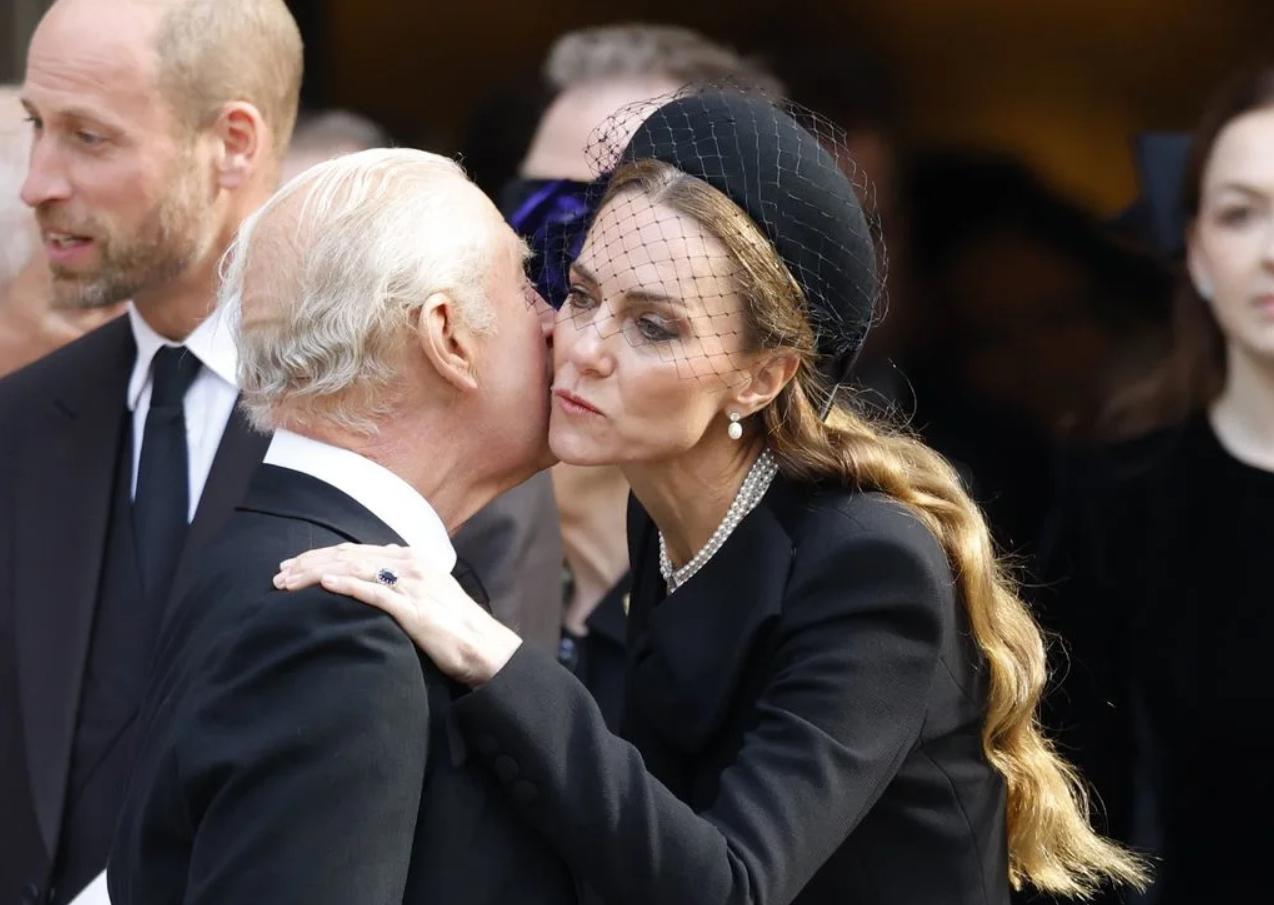
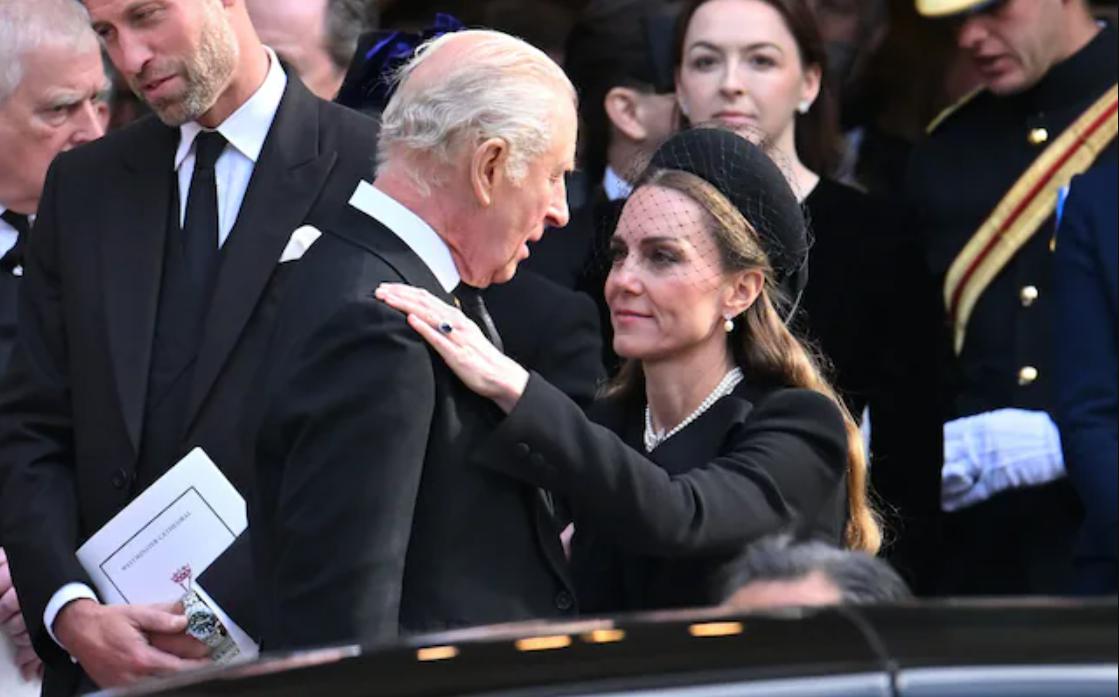
It was after this moment—when the ceremony’s formality had lifted—that one of the day’s most human and memorable gestures unfolded. Standing together on the cathedral steps, the royals exchanged quiet words of comfort, supporting one another in their collective loss. Among these, a tender exchange between Princess Catherine and King Charles captured the world’s attention.
Approaching with her characteristic poise, the Princess of Wales lowered her head in a graceful curtsy before leaning forward to kiss the King gently on both cheeks. The gesture, at once rooted in tradition and imbued with personal warmth, resonated deeply. Observers noted the King’s expression—visibly moved, his eyes heavy with emotion—as he received the show of affection from his daughter-in-law. It was more than a gesture of protocol; it was a reminder of the enduring bonds that knit the monarchy together in times of loss.




Soon after, Prince William and Princess Catherine departed the cathedral behind the King, the quiet sequence reflecting the continuity of duty that defines the modern royal family. For many, Catherine’s public composure, balanced with private tenderness, underscored her growing role as a unifying figure in the monarchy—someone who bridges the formality of royal life with moments of humanity that resonate with the public.
The Duchess of Kent herself embodied many of these same qualities during her lifetime. Remembered as a woman of empathy and service rather than grandeur, she touched countless lives through her charitable work. Her passion for music education, particularly her decision to teach children quietly and without fanfare, revealed a rare humility within the royal world. Though she withdrew from frontline duties in the 1990s, her influence endured through her advocacy for the arts and her reputation for compassion.
Both King Charles and Queen Camilla, as well as the Prince and Princess of Wales, issued heartfelt statements following her passing. William and Catherine emphasized her devotion to causes close to her heart, saying:
“Our thoughts today are with the Duke of Kent and his family, particularly George, Helen, and Nicholas. The Duchess worked tirelessly to help others and supported many causes, including through her love of music. She will be a much-missed member of the family.”
The King and Queen echoed the sentiment in their own tribute, praising her “lifelong devotion to organizations with which she was associated, her passion for music, and her empathy for young people.”
For royal watchers, the image of Princess Catherine’s curtsy and kiss at the close of the service became one of the day’s defining symbols. It illustrated the balance of tradition and personal connection that sustains the monarchy in moments of grief. More than ceremony, it was a gesture of solidarity, respect, and affection between two generations of the royal family.
As Britain adjusts to life without the Duchess of Kent, her memory lives on in the traditions she cherished and the causes she championed. And through one small but powerful exchange between Catherine and King Charles, the world was reminded that even within the grandeur of monarchy, it is these moments of tenderness, humanity, and connection that endure.