Palace’s BIG ANNOUNCEMENT About Prince William Amid Baby Faces Major Inheritance & Title
The bonds of friendship within Britain’s upper circles often carry a weight that extends far beyond personal loyalty. They form invisible threads, binding together the nation’s aristocracy and monarchy in ways that shape both public perception and private life. This has rarely been more evident than in the long-standing relationship between Prince William, Prince of Wales, and Hugh Grosvenor, the seventh Duke of Westminster. Their connection is not simply one of friendship, but of deep familial and institutional ties, woven across generations and cemented through godparent roles, weddings, and mutual support in times of joy and hardship.
Recently, the Duke and Duchess of Westminster, Hugh and Olivia, welcomed their first child, a daughter named Lady Cosima Florence Grosvenor. The birth, announced on July 27th, instantly drew attention from across the aristocratic world. It was a moment of personal joy for the young couple, but it also carried wider implications for the House of Westminster, one of Britain’s wealthiest dynasties with an estimated fortune of £10 billion rooted in vast estates and properties across London and beyond. For the monarchy, too, the news carried a resonance: the Grosvenors are no ordinary noble family. Hugh is godson to King Charles III, and his mother, Natalia, Duchess of Westminster, is godmother to Prince William.
With such interwoven histories, the question of who will be chosen as Lady Cosima’s godfather has become a subject of intense speculation. According to reports, Hugh and Olivia face a delicate dilemma that some sources have described as a “minefield.” Both Prince William and Prince Harry are said to be contenders. On one hand, William is a lifelong friend, having asked Hugh to serve as one of Prince George’s godfathers back in 2013. On the other, Hugh is also godfather to Prince Archie, the son of Harry and Meghan Markle, creating a situation where whichever brother is chosen could be seen as symbolic in the ongoing rift between them.
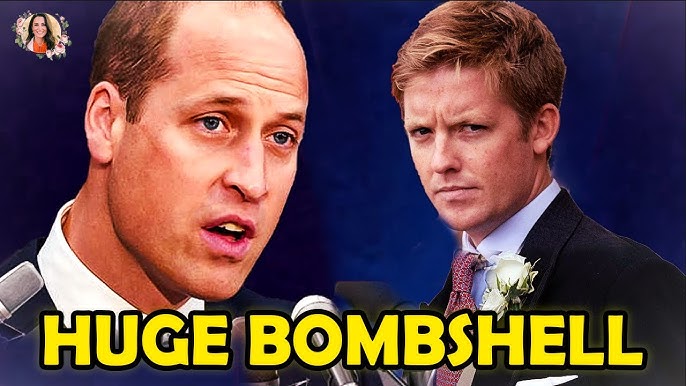
Prince William is reportedly the frontrunner, especially given his presence at Hugh and Olivia’s society wedding at Chester Cathedral in June 2024. At the ceremony, William served as an usher, a role that highlighted his closeness to the Duke. Harry, meanwhile, despite reportedly receiving a “save the date” card, did not attend the wedding—an absence that many saw as reflective of his strained ties with both the royal family and certain aristocratic circles. For royal watchers, this fuels curiosity: will Hugh feel an obligation to balance his loyalties, or will tradition and proximity tip the scales toward William?




The significance of this decision goes beyond ceremony. Within Britain’s elite, godparent appointments often function as signals of alliance, loyalty, and long-term support. To name William as godfather would strengthen the next generation’s connection to the monarchy, reinforcing the Grosvenor family’s role as one of the Crown’s most steadfast allies. Choosing Harry, however, would be a powerful statement of inclusivity and reconciliation, one that could perhaps mend some of the fractures that have defined recent years.
Beyond questions of godparents, Lady Cosima’s birth has reignited debate about aristocratic inheritance laws. Despite her noble lineage and the enormous fortune she stands to inherit, she cannot succeed to her father’s dukedom, as the Westminster title passes strictly through the male line. Unless Hugh and Olivia have a son, the dukedom will eventually pass to another male relative. The issue highlights the tension between centuries-old traditions and modern conversations around gender equality, echoing past debates within the monarchy itself, where the 2013 Succession to the Crown Act ended male-preference primogeniture. For now, however, the inheritance rules of Britain’s nobility remain largely unchanged.
Hugh’s own path to the title in 2016 underscored the importance of this system. As the only son of the 6th Duke, he inherited not only the title but also one of the largest private fortunes in the country. Since then, he has taken on the stewardship of the Grosvenor Estate, which encompasses some of the most prestigious properties in London, including swathes of Belgravia and Mayfair. Under his leadership, the estate has modernized its operations, investing in sustainable development and charitable initiatives, while maintaining its historic prominence.
The Grosvenors’ role in high society extends far beyond wealth. They have long been regarded as one of the monarchy’s closest allies, providing both quiet support and public solidarity. Hugh’s close relationship with William reflects this. The pair have been seen together at public and private events, most recently when William and his son Prince George attended a Champions League match alongside Hugh and Olivia at Villa Park in April 2025. The sight of the two families celebrating together in the stands was widely interpreted as a glimpse of the enduring bond between the Grosvenors and the royal family.
For now, Hugh and Olivia are said to be focused on the simple joys of parenthood. A source close to the family remarked that they are “just looking forward to spending time with their daughter” and are not inclined to comment on inheritance debates or broader constitutional questions. Still, Lady Cosima’s arrival is more than a personal milestone. It represents the continuation of one of Britain’s most influential dynasties, one whose fortunes, friendships, and obligations remain closely linked with the Crown.
As Britain watches the next generation of aristocracy and royalty come of age, Lady Cosima Florence Grosvenor’s birth serves as both a reminder of tradition and a symbol of transition. Whether through questions of inheritance, the choice of her godfather, or the enduring friendship between her family and the House of Windsor, her arrival has already begun to shape conversations about the future of Britain’s elite—and how ancient ties adapt in a changing world.