Prince William BREAKS DOWN As King Charles REVEALS Princess Diana’s Final Wish
Behind the grand walls of Clarence House, what began as an ordinary afternoon turned into a moment that would leave an indelible scar on the British monarchy — and break Prince William’s heart, the future king’s heart, utterly.
It started with a quiet call from King Charles. No cameras. No press. Just two sons summoned by their father for a private conversation that would upend everything they thought they knew about their past, and their mother.
What they were handed wasn’t a royal decree or an ancient relic from the archives. It was an envelope, worn and sealed, marked in the unmistakable handwriting of their mother — Diana, Princess of Wales.
Charles’s voice cracked slightly as he spoke: “This is your mother’s final wish. She wrote it for you both.”
The silence that followed was deafening.



Inside the envelope was a letter, handwritten by Diana in the weeks before her tragic death — a letter kept locked away for over two decades in a private safe known only to King Charles and one trusted aide. William and Harry had never seen it. They never even knew it existed.
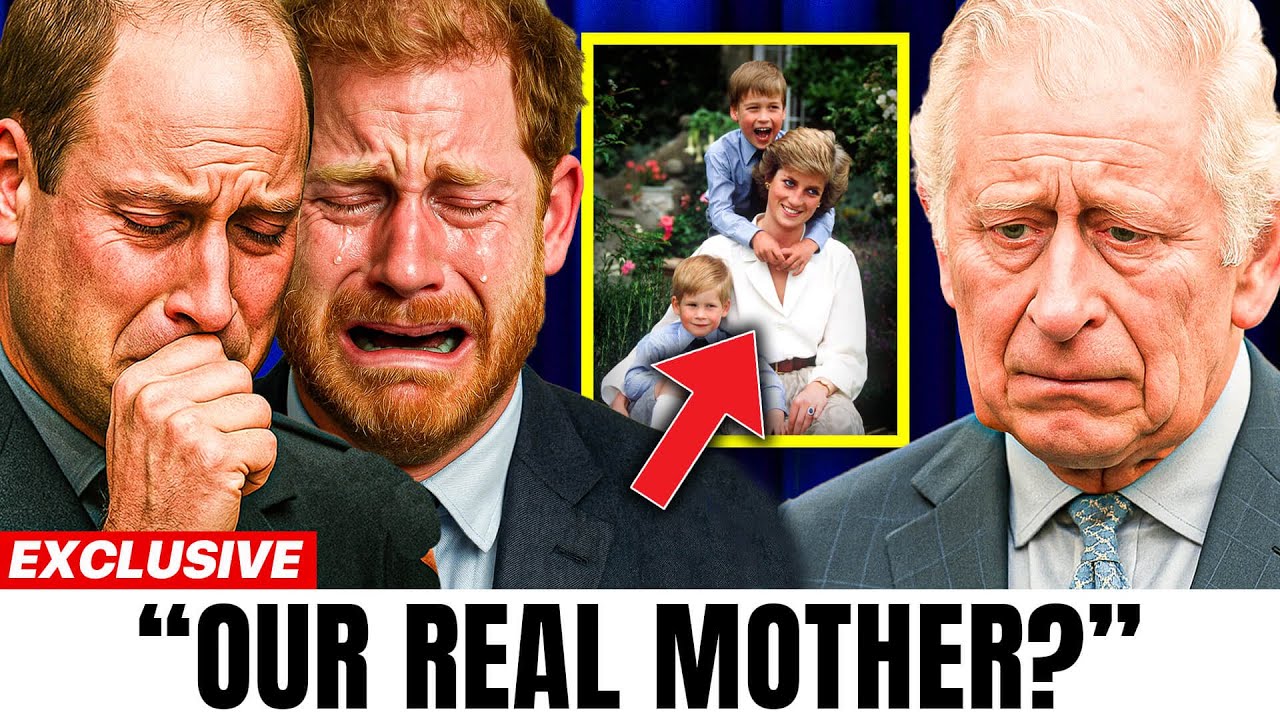
The moment William unfolded the fragile paper, the world seemed to stop. Here, in her own words, was the mother he had lost as a teenager — not the tabloid figure, not the global icon, but his mom: a woman full of tenderness, fear, and unshakable love for her boys.
She didn’t ask for riches or revenge. She begged only that her sons live without fear, without masks, without the emotional repression that had haunted generations of Windsor.
William sat frozen, hands trembling. A future king — now just a son — reeling from the realization that the mother he had idolized had left behind a desperate plea, and it had been kept from him.
“She wanted us to be normal.”
For William, this was more than painful. It was a betrayal.
Diana’s letter wasn’t just words on a page. It was her voice from beyond the grave — calling out for the very life William never got to have: a life of feeling, not formality; of freedom, not function.
And yet, all these years, the man who had promised to raise them, the man who had survived the scandal of Diana’s death, had hidden her final wish.
Why?
That was the question burning in William’s mind as he stared at his father, a mixture of disbelief and hurt clouding his gaze.
The same man who had vowed to prepare him for the throne had denied him the one truth that might have changed the course of his life.
In that room, for the first time in decades, William felt the sharp sting of a wound he thought had healed.
He had always carried Diana’s loss with quiet dignity — never speaking publicly in anger, never allowing the pain to overwhelm him. But now, confronted with the words she had written to protect him, he realized how deeply she had feared what he would become.
“They must be free to love, to feel, to lead without wearing a mask,” she wrote.
But the mask was already on.
William had spent his adult life balancing duty and compassion, trying to modernize the monarchy while silently carrying its heaviest burdens. Diana had warned him of this — of the system that threatened to turn her sons into something they were not.
Now William couldn’t help but wonder: had it already happened?
For years, he had stepped in for his grandmother, taken on his father’s duties, shouldered the expectations of a kingdom — but never had he stopped to ask, “Is this the life she wanted for me?”
The revelation shattered him — and perhaps, it changed him.
According to palace aides, William has since withdrawn from several private meetings and was seen leaving Clarence House in a state of quiet turmoil. Though no official comment has been made, insiders say his trust in King Charles has been profoundly damaged.
For the monarchy itself, this moment is seismic.
Diana’s letter — once hidden in a drawer — now threatens to destabilize the very legacy she tried to protect her sons from.
It raises impossible questions: What else was kept from them? And can the royal family survive the truth?
But for William, the pain is deeply personal.
It’s the ache of a boy who lost his mother too soon, and has just lost her all over again.
As he clutched the letter, one sentence stood out more than any other:
“Don’t let them be trapped in a life they didn’t build for themselves.”
It was a plea. It was a warning.