Revealed: William & Catherine Take Center Stage In The Monarchy Amid King Charles’s Health Concerns
As King Charles continues his battle with cancer, the spotlight is intensifying on the Prince and Princess of Wales — not simply as the popular faces of the monarchy, but as the de facto backbone of its future.
Behind palace gates and beyond the glittering royal appearances, a remarkable transition is quietly unfolding.
With King Charles, 76, increasingly prioritizing his health and taking a more measured public schedule, Prince William and Princess Catherine are stepping into roles that are more central, more demanding, and more consequential than ever before.
A senior royal insider speaking with The Examiner put it plainly:
“King Charles is leaning on them a lot more. It’s very clear he’s seeing them as the future of the monarchy. It’s exciting for them, but it also comes with enormous pressure. They don’t want to let him down.”
For William, 43, the responsibility is monumental. As the heir to the throne, he has always been groomed for kingship, but few expected this degree of early involvement in strategic royal planning — all while navigating a delicate family landscape.




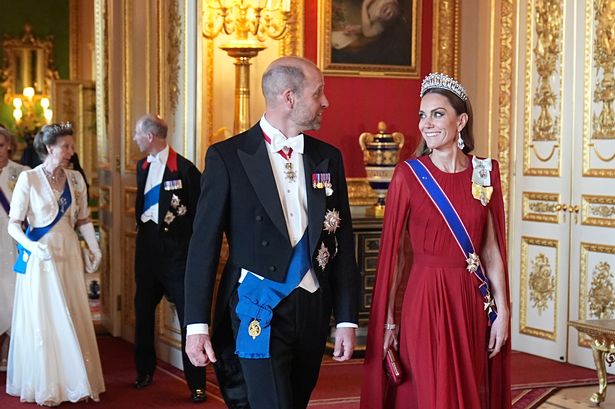
For Catherine, 43, the pressure is twofold. She is not only re-entering public life after bravely revealing her own cancer diagnosis just months ago, but doing so under the harsh glare of expectation, amid a period of profound change within their inner circle.
One of the most poignant changes behind the scenes involves the quiet departure of Natasha Archer — Catherine’s long-serving personal assistant and trusted stylist.
Archer has been by Catherine’s side since 2010 — the same year the couple announced their engagement — and played a pivotal role in shaping the Princess’s iconic public image.
In early July, it was confirmed that Archer, 37, is stepping away from royal service to launch her own consultancy, marking the end of an era for the Wales family.
A source close to the royal household told People:
“The team wished Natasha the very best as she embarks on an exciting new chapter. There’s deep respect there. No bad blood at all.”
Yet Archer’s exit leaves a significant void — one that Catherine must now navigate while recovering from illness and adjusting to a heavier schedule.
“They’re losing their right-hand person,” an insider revealed.
“And in the middle of everything else — the added duties, Catherine’s recovery, and raising three young children — it’s a massive challenge. They’ll need to find someone new and train them, all while keeping everything moving forward.”
What many outside observers don’t see is how deeply involved William and Catherine now are in the strategic direction of the monarchy itself.
While King Charles remains active — still attending engagements and maintaining a firm grip on his vision — he is said to be scaling back, choosing only the most essential events and discussions.
This leaves William and Catherine to shoulder the day-to-day weight of a modern monarchy.
“They’re not just shaking hands and cutting ribbons anymore,” a palace source shared.
“They’re sitting in high-level discussions, contributing to the monarchy’s future, shaping what the next era will look like.”
William, in particular, is said to be balancing his instinct to modernize with the need to stay aligned with his father’s vision — a task that requires diplomacy, patience, and long-term thinking.
“William has ideas for change,” the insider added.
“He’s thinking about what the monarchy should look like in 10, 20, even 30 years. But he’s also deeply respectful of his father’s legacy — and that makes it a very delicate balance.”
Meanwhile, Catherine’s return to public life has been nothing short of courageous.
While still taking rest days and prioritizing her health, she is gradually resuming her duties with the poise and empathy the public has come to admire.
Her involvement in high-level matters is expected to increase — especially as the couple takes on more shared engagements and divides their time between official duties, parenting Prince George, Princess Charlotte, and Prince Louis, and managing their household without Archer’s steady presence.
To the outside world, they may still be known as William and Catherine.
But within the palace, there is no doubt about the roles they now play.
They are not just the younger generation.
They are the bridge between tradition and the future, already carrying the weight of the crown in a very real and personal way.
And as King Charles focuses on recovery, there’s a growing realization:
This royal shift may not be temporary — but the beginning of a new era.
The public may not see it yet.
But the monarchy is changing.
And at the heart of that change are two people — deeply committed, quietly resilient, and steadily rising to meet the moment.