William’s Tearful Confession: The Lasting Pain Of Losing His Grandparents In Emotional New Interview
Prince William has opened up with remarkable candor about grief, resilience, and the personal trials that have shaped him in a moving interview for Apple TV Plus’s The Reluctant Traveler. Sitting down with Emmy-winning actor Eugene Levy inside Windsor Castle, the Prince of Wales reflected on the profound impact of losing both his grandparents, Queen Elizabeth II and Prince Philip, while also speaking about the immense challenges his family has faced in recent years.
The conversation began with a simple but heartfelt question from Levy: “Do you miss your grandmother?” William’s answer, delivered with visible emotion, cut straight to the heart of his loss: “I do actually, yeah, I do miss my grandmother and my grandfather. It’s been quite a bit of change. So, you do think about them not being here anymore. Particularly being in Windsor. For me, Windsor is her. She loved it here. She spent most of her time here. Showing you around today is very much a case of trying to make sure I’m doing it in the way she’d want you to see it.”
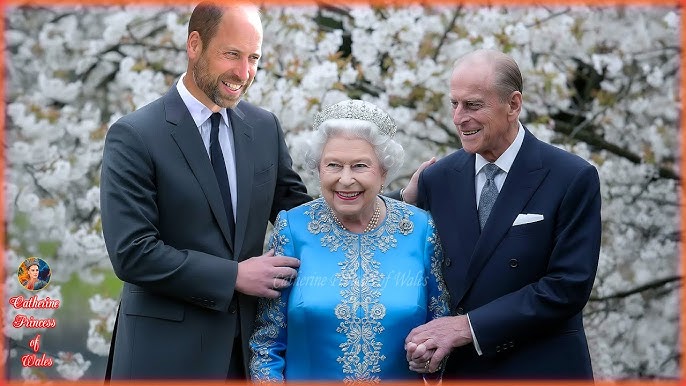
For William, Windsor Castle is not just a royal residence but a living memory of Queen Elizabeth II’s enduring presence — her love of horses, her commitment to service, and the quiet dignity with which she lived her life. Both the Queen and Prince Philip now lie side by side in St. George’s Chapel, a place that William described as a deeply personal reminder of their influence on him and the monarchy as a whole.
But the interview went beyond loss, delving into the extraordinary pressures of recent years. William acknowledged with striking honesty that “2024 was the hardest year I’ve ever had.” In the space of months, both his father, King Charles III, and his wife, Princess Catherine, were diagnosed with cancer. The palace announced the King’s diagnosis in February 2024, while Catherine courageously revealed her own condition in a deeply personal video message, explaining she was undergoing preventative chemotherapy.



Recalling those months, William spoke about the emotional toll of balancing his royal role with the needs of his young family. “Life is sent to test us as well, and being able to overcome that is what makes us who we are,” he told Levy, encapsulating the mixture of stoicism and humanity that has defined his approach. The prince had previously described 2024 as “brutal” during a trip to South Africa — a word that struck many as unusually raw from a senior royal.
Thankfully, there has since been light after the storm. In January 2025, Catherine shared uplifting news that she was in remission, a moment that filled royal fans worldwide with relief and joy. King Charles, meanwhile, continues to receive treatment while maintaining a scaled-back public role. These experiences, William suggested, have strengthened his perspective on family, duty, and resilience.
Yet the interview also revealed a more playful side. When Levy asked what he enjoys most when at home, William chuckled before replying, “Sleep. When you have three small children, sleep is an important part of my life.” It was a tender reminder that despite the titles and responsibilities, he is still a hands-on father to Prince George, Princess Charlotte, and Prince Louis, facing the same exhaustion every parent knows.
One of the most charming moments came when Levy revealed that William had personally written him an invitation: “I heard that your travels have brought you to the UK and I wondered if you might like to see Windsor Castle. If you’re free at 10 tomorrow, why don’t you pop down to the castle for a private tour. Would be great to see you.” This small but thoughtful gesture captured William’s approachable, modern style — a blend of tradition with warmth and relatability.
What emerges from this rare, intimate interview is a portrait of a man shaped as much by personal love and loss as by his role as heir to the throne. The grief of losing his grandparents, the strain of his wife’s illness, and the challenge of preparing for kingship have tested him in ways few can imagine. But his openness, empathy, and resilience are precisely the qualities many believe will define his reign when the time comes.
For royal fans, this glimpse behind the palace walls is both moving and reassuring. It shows that beneath the crown lies a husband, a father, and a grandson — a man navigating hardship with dignity, leaning on love, and striving to remain connected to the people he will one day serve as king. In William’s words and actions, there is a reminder that even the future sovereign is not untouched by sorrow, but it is how he carries it forward that speaks volumes about the kind of monarch he may become.